Old-Growth Forests of Vancouver Island: Cathedral Grove, Avatar Grove & Big Lonely Doug
Some of the tallest living things in Canada stand a short walk from a provincial highway on Vancouver Island. Here is where the ancient groves are, how to reach each one, and which is worth the longer drive.
See Cathedral Grove without managing the long drive. A private Victoria day adds two waterfalls and Coombs. Check Cathedral Grove Tour Dates
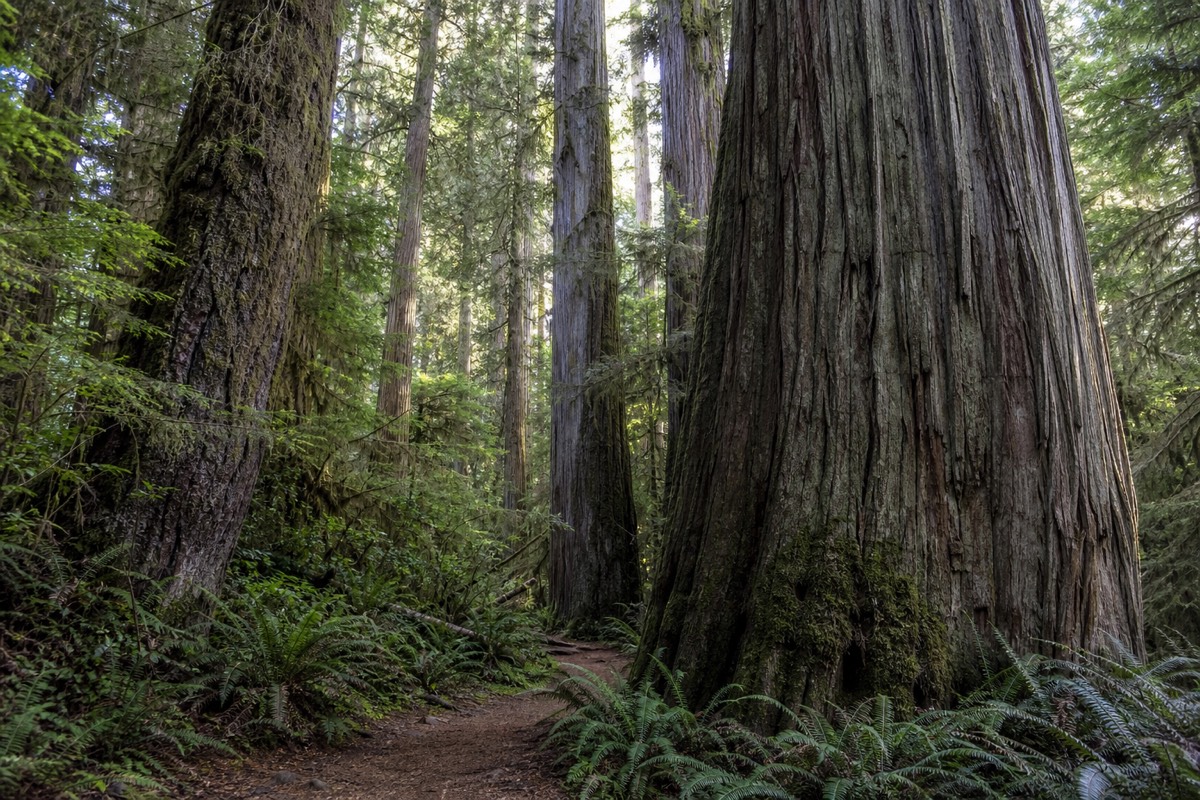
The first thing that fails you at Cathedral Grove is scale. You stand at the base of a Douglas fir wider than a dinner table, tilt your head back, and the crown still refuses to fit inside a photograph. People go quiet on the loop trail, which is not something you can say about most roadside stops. That reaction is a large part of why these forests pull visitors from the other side of the world.
Vancouver Island holds some of the last easy-to-reach stands of coastal old-growth in North America, trees that were already old when the first sailing ships reached this coast. A few of them sit right beside the highway. Others take a long drive down gravel logging roads to a trailhead with a hand-painted sign. This guide covers the groves worth the effort, what each one actually feels like, and how to build a day around the big trees without spending most of it behind the wheel.
How long to allow on foot at each grove
Times are planning allowances for an unhurried walk, not fixed durations; Cathedral Grove's single loop runs about twenty minutes, and the Port Renfrew groves reward a slower pace.
Where are the best old-growth forests on Vancouver Island?
The three groves most visitors travel for are Cathedral Grove in MacMillan Provincial Park on Highway 4, and Avatar Grove and Big Lonely Doug near Port Renfrew on the south coast. Cathedral Grove is the easy roadside stop. The Port Renfrew trees reward a longer, wilder drive with far fewer people around them.
Those three are not the only ancient forest on the island, but they are the ones with names people search for. Cathedral Grove is the household name, the one on the way to Tofino that almost every road trip passes. Avatar Grove and Big Lonely Doug belong to Port Renfrew, the small coastal village that bills itself as Canada's tall tree capital. On the south island's Juan de Fuca coast there is also Jurassic Grove, a stand of thousand-year-old western red cedars that pairs naturally with a beach day, and the temperate rainforest of the west coast around Tofino sits in its own category.
| Grove | Where it is | Getting there | What makes it special | Crowds |
|---|---|---|---|---|
| Cathedral Grove | MacMillan Provincial Park, Highway 4 at Cameron Lake | Paved highway, roadside parking | Giant Douglas firs and cedars, some past 800 years, a 20-minute loop | Busy, often full in summer |
| Avatar Grove | Near Port Renfrew, south coast | Active gravel logging road, then a boardwalk | Twisted, burled cedars and firs on a built trail, few people | Quiet to moderate |
| Big Lonely Doug | Edinburgh Mountain area near Port Renfrew | Gravel logging road, short walk from parking | One enormous fir left standing alone in a clearcut | Quiet |
| Jurassic Grove | Juan de Fuca coast west of Sooke | Highway 14, then a short forest trail | Western red cedars near 1,000 years old, close to the beach | Quiet |
| Pacific Rim rainforest | West coast near Tofino and Ucluelet | Highway 4 to the coast, boardwalk trails | Living temperate rainforest by the ocean, not a single grove | Moderate to busy |
What makes Cathedral Grove the easiest ancient forest to see?
Cathedral Grove sits inside MacMillan Provincial Park on Highway 4, right on the banks of Cameron Lake, between Parksville and the west coast. Old-growth Douglas firs and western red cedars between 300 and 800 years old line a short loop trail that takes around twenty minutes to walk. You park at the road and step straight into the forest.
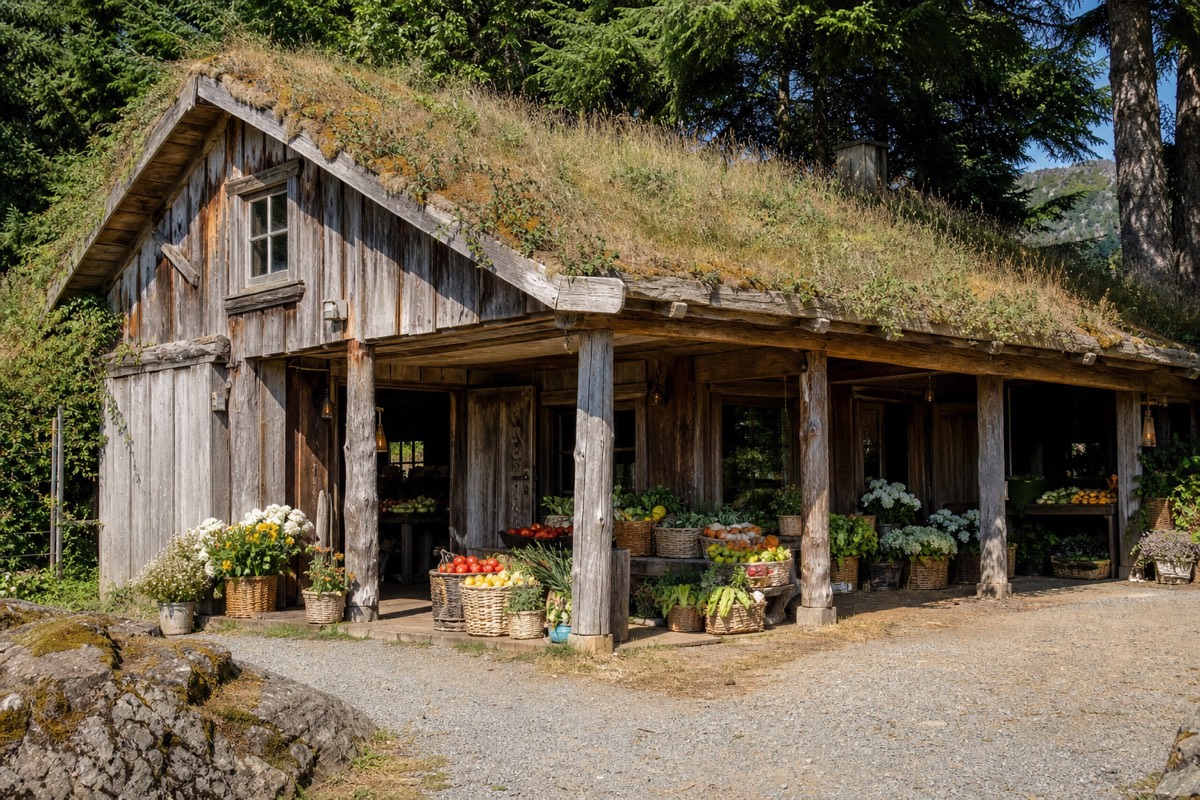
That accessibility is the whole point and also the whole problem. Because the grove is a ten-minute stop for nearly every car heading to Tofino, the small roadside lay-bys fill fast on summer days, and people end up parked along the highway shoulder walking single file to the trailhead. Arrive early, or arrive late in the afternoon, and the same forest feels completely different. Midday in July is the version most people complain about.
There are two loops, one on each side of the highway. The south side, in the wetter ground near the creek, holds the biggest Douglas firs and the trail most visitors remember. The north side is quieter, with a mossier cedar character and fewer people, and it is the one to choose if the main loop is packed. Both are flat, wide and easy underfoot. The provincial park itself is small and day-use only, with no camping and no fee to walk in, and the practical details for the park sit on the official MacMillan Provincial Park page. If you are still deciding whether the stop earns its parking hassle, we make the honest case in our piece on whether Cathedral Grove is worth the stop.
Is Avatar Grove near Port Renfrew worth the drive?
Yes, if you want ancient trees without the crowds and you do not mind a gravel road. Avatar Grove near Port Renfrew is a stand of twisted, burl-covered western red cedars and Douglas firs, reached by an active logging road and then explored on a built boardwalk that splits into a lower and an upper section. It is one of the island's best forest walks.
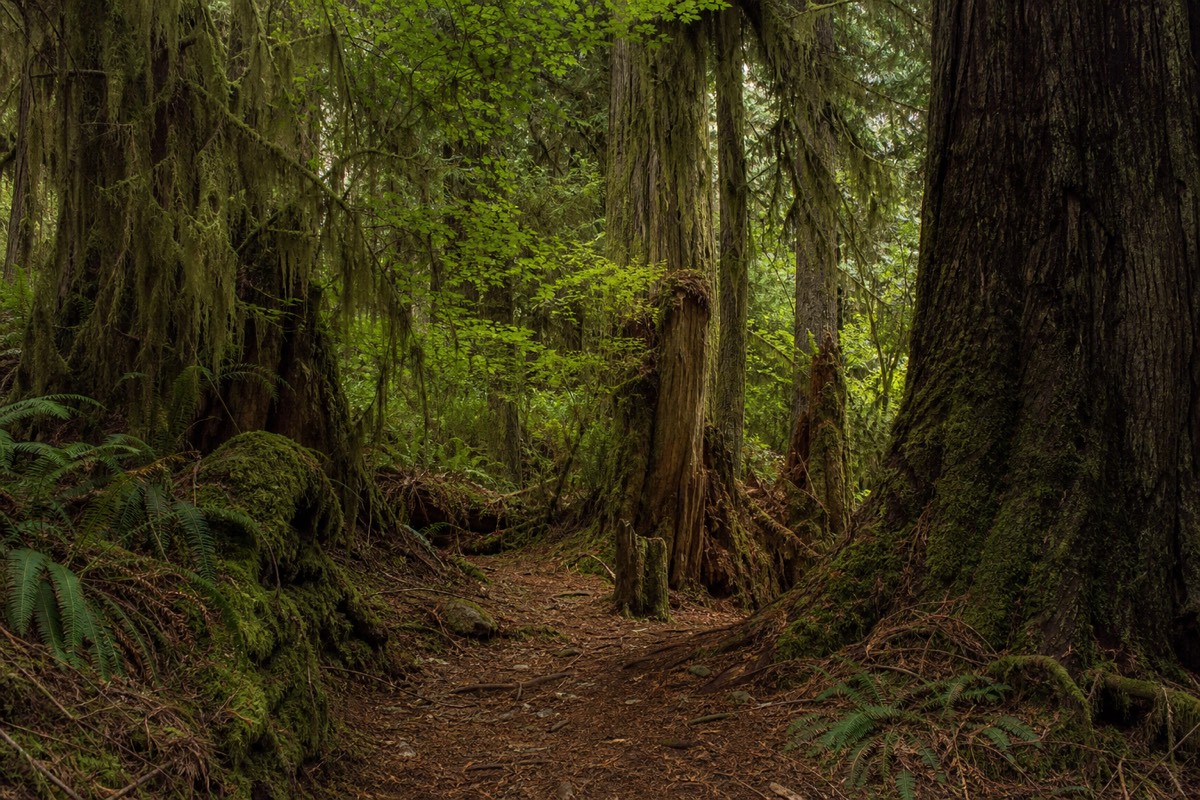
The character here is different from Cathedral Grove. Where Cathedral Grove is about clean vertical scale, Avatar Grove is about strangeness: cedars swollen with enormous burls, firs kinked and gnarled into shapes that look almost animal. The lower grove is the gentler walk. The upper grove climbs a little more steeply, on stairs and boardwalk sections, to reach what is often called the gnarliest tree in Canada, a cedar with a burl the size of a small car.
Getting there takes commitment. Port Renfrew is roughly two hours from Victoria on Highway 14 past Sooke, and the grove itself lies beyond the village on gravel logging roads that stay in active use, so drive slowly and watch for trucks. The road is passable in a normal car in dry conditions, but it is rough, and there is no cell service out there. This is a place to fill the tank, pack water, and tell someone your plan before you go.
Give yourself more time here than the short trail distances suggest. The lower and upper grove together are an easy hour if you stop to actually look, and most people wish they had lingered rather than rushed. Wear shoes with grip, because the boardwalk and the forest floor stay damp under the canopy even in summer, and bring a layer, since it runs several degrees cooler in the shade of the big cedars than it does out on the road. Weekday mornings are the quietest window, and the low, raking light early in the day is when the burls and hollows photograph best.
How do you find Big Lonely Doug?
Big Lonely Doug is one of the largest Douglas firs still standing in Canada, and it is famous for a sad reason: it stands completely alone in the middle of a clearcut near Port Renfrew, the single tree a logger chose to leave when everything around it was felled. You reach it by gravel logging road, then a short walk across the stumps.
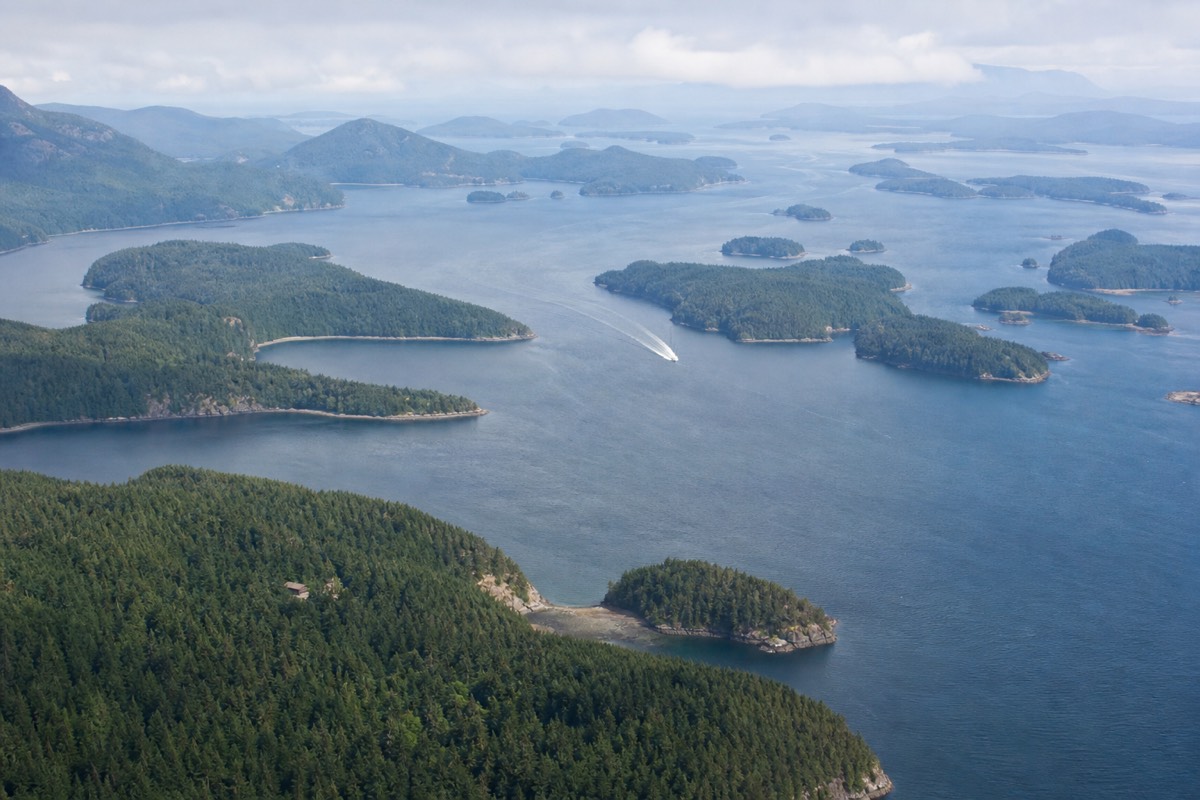
The tree is remarkable on its own, but the setting is what makes people stop and think. Cathedral Grove and Avatar Grove show you an intact forest. Big Lonely Doug shows you what is gone: a giant survivor rising out of a field of cut stumps, with a young replanted forest coming up around its base. It has become an accidental monument, the subject of a well-known book, and a quietly powerful counterpoint to the postcard groves.
Practically, it is close to Avatar Grove and best done as part of the same Port Renfrew day. The final approach is on active logging roads that change with the seasons, conditions are not signposted like a provincial park, and a dry-weather visit in a vehicle with decent clearance is the sensible plan. If the road looks worse than you are comfortable with, turn around; the tree is not worth a stranded car deep in a cutblock.
What is the difference between a Douglas fir and a western red cedar grove?
Douglas firs are the tall, straight, deeply-furrowed giants that give Cathedral Grove its cathedral feeling, reaching for height on drier ground. Western red cedars are the broad, fluted, often hollowed trees of wetter sites, and they live the longest, which is why the island's thousand-year-old trees tend to be cedars rather than firs.
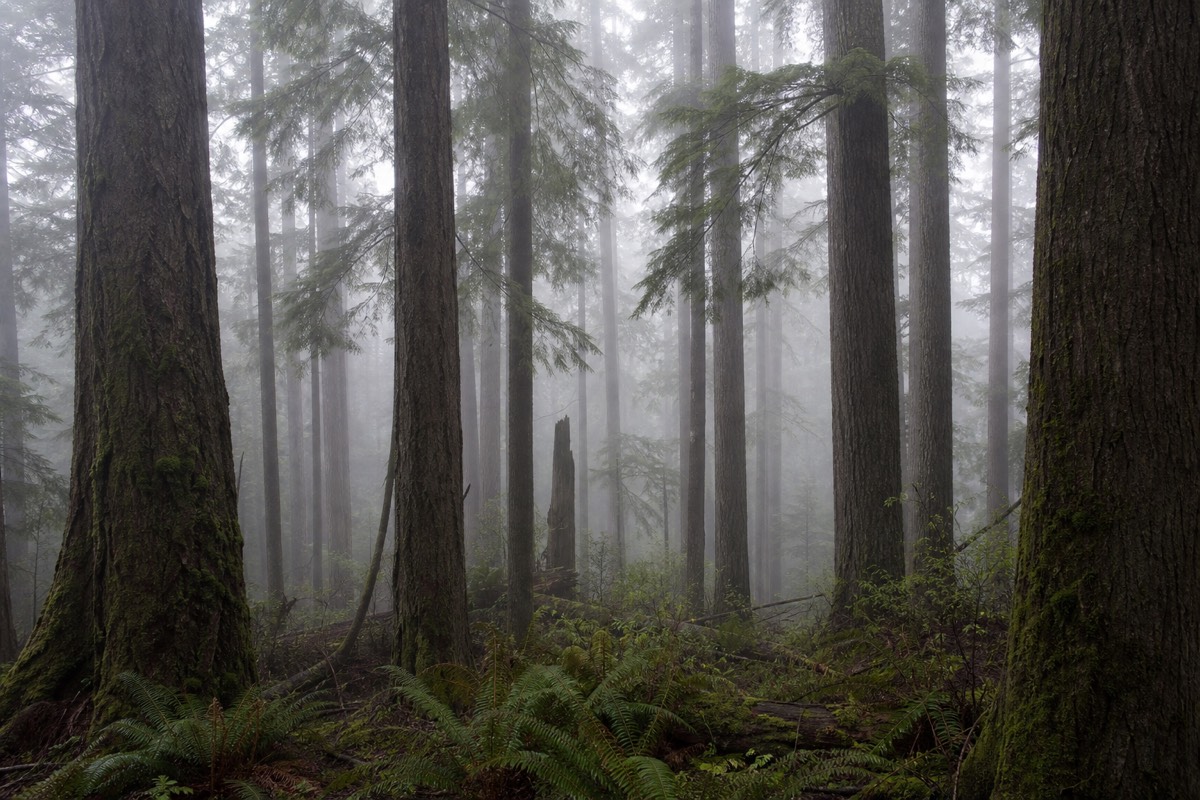
Knowing which is which changes what you notice on the trail. A Douglas fir has thick, corky bark broken into ridges you could fit a hand into, a long clean trunk, and branches that only start high up. A western red cedar has stringy, reddish bark, a base that flares out into buttresses, and a habit of splitting into several trunks or going hollow with age while staying very much alive. Both grow together across the island's old-growth, but the balance shifts with the ground.
| Feature | Douglas fir | Western red cedar |
|---|---|---|
| Look | Tall, straight, deeply ridged bark | Broad flared base, stringy red bark, often hollow |
| Where it dominates | Drier, well-drained slopes | Wetter ground, creek flats, seepage sites |
| Typical star grove | Cathedral Grove, Big Lonely Doug | Avatar Grove, Jurassic Grove |
| Oldest ages you meet | Several centuries, some past 800 years | Can approach 1,000 years and beyond |
| What people remember | Sheer height and girth | Weird burls, hollows and buttresses |
How accessible are the groves, and which suit limited mobility?
Cathedral Grove is the most accessible by a wide margin: flat, wide, mostly hard-packed loops a short step from the parking area, suitable for careful strollers and many mobility aids in dry conditions. Avatar Grove is a built boardwalk with steps, so the lower grove works for steady walkers but the upper grove does not. Big Lonely Doug involves rough ground.
The honest picture matters here, because roadside does not always mean easy. Cathedral Grove's loops are level, but tree roots cross the trail in places and the surface can be greasy after rain. It is the only one of the three where a wheelchair user or a family with a stroller has a realistic and pleasant visit. At Avatar Grove the boardwalk protects the roots and keeps footing predictable, but the upper section climbs on stairs. Big Lonely Doug asks you to cross uneven, cut-over ground, which rules it out for anyone unsteady on their feet.
| Grove | Trail surface | Distance | Steps or climbing | Suits |
|---|---|---|---|---|
| Cathedral Grove, main loop | Flat, hard-packed, some roots | Short loop | None | Most visitors, careful strollers, many mobility aids |
| Cathedral Grove, north loop | Flat, softer in places | Short loop | None | Anyone wanting a quieter walk |
| Avatar Grove, lower | Boardwalk and forest floor | Short | A few steps | Steady walkers |
| Avatar Grove, upper | Boardwalk with stairs | Short but steeper | Yes, stairs | Confident walkers only |
| Big Lonely Doug | Rough cut ground | Short walk from parking | Uneven footing | Sure-footed visitors |
How do you reach each grove from Victoria, Nanaimo and Tofino?
Cathedral Grove is the only one that fits neatly into a Victoria-to-Tofino or Nanaimo day, sitting on Highway 4 about an hour west of Nanaimo. Avatar Grove and Big Lonely Doug belong to the south coast near Port Renfrew and are reached from Victoria by Highway 14, not from the central island. Plan them as separate trips, not a single loop.
The geography catches people out. Cathedral Grove and the Port Renfrew groves are at opposite ends of the island's road network, so no single driving day sensibly links all three. Treat the numbers below as planning allowances rather than promises, because summer traffic, roadworks and the pace of a gravel road all move them around.
| From | Cathedral Grove | Avatar Grove / Big Lonely Doug |
|---|---|---|
| Victoria | Allow about 2.5 hours via Highway 1 and Highway 4 | Allow about 2 hours via Highway 14 through Sooke |
| Nanaimo | Allow about 1 hour west on Highway 4 | Not a practical day trip |
| Tofino | Allow about 2 hours east on Highway 4 | Not a practical day trip |
| Parksville / Coombs | Allow about 30 to 40 minutes | Not a practical day trip |
If you are driving the length of the island anyway, Cathedral Grove slots in as the natural mid-route stretch of the legs. We map the full route, including the stops most people miss, in our guide to Vancouver Island road trips and scenic drives.
When is the best time to visit the old-growth forests?
May, June and September are the sweet spot: green, mild, and far quieter than the July and August peak, when Cathedral Grove's small parking areas overflow by mid-morning. The forests are worth visiting year-round, but winter brings rain, short days, and slick trails, and gravel logging roads to the Port Renfrew groves are at their worst in the wet.
Old-growth forest does not have a bloom season, so timing is really about crowds, light and road conditions rather than the trees themselves. The canopy stays green through the year, and a misty, dripping day can be more atmospheric under the big cedars than bright sun. What changes is how many people you share the trail with and how the access holds up.
| Season | Conditions | Crowds | Notes |
|---|---|---|---|
| Spring, April to June | Fresh green, mild, some rain | Light to moderate | Best balance, gravel roads drying out |
| Summer, July to August | Warm, dry, long days | Heavy at Cathedral Grove | Go early or late to beat the parking crush |
| Autumn, September to October | Cool, often clear, atmospheric | Light | A quiet favourite, good logging-road access early on |
| Winter, November to March | Wet, dark, slippery | Very light | Cathedral Grove still fine, Port Renfrew roads dicey |
How do the groves compare to the Pacific Rim rainforest?
The named groves are single stands you walk in twenty minutes to an hour. The Pacific Rim rainforest on the west coast is a whole living ecosystem you move through on boardwalk trails between beaches, wetter and wilder, with the ocean always close. If you want one big-tree moment, choose a grove. If you want to spend a day inside temperate rainforest, go to the coast.
They are complementary rather than competing. Many visitors see Cathedral Grove on the drive out and then spend two or three days among the rainforest trails and beaches near Tofino, which is exactly how the route is built to work. The west coast forest is soggier, mossier and more tangled, threaded with short interpretive boardwalks, and it comes packaged with surf beaches and wildlife that the inland groves cannot offer.
| Aspect | Named groves | Pacific Rim rainforest |
|---|---|---|
| Scale of visit | 20 minutes to an hour | Half a day to several days |
| Feel | A single monumental stand | A living, dripping ecosystem |
| Setting | Inland, roadside or logging road | Coastal, between surf beaches |
| Best paired with | A road trip or a waterfall day | Beaches, surfing and wildlife cruises |
For the trails, beaches and park passes on that side of the island, see our full Pacific Rim National Park guide, and Parks Canada keeps the official conditions and reservations on the Pacific Rim National Park Reserve site. The temperate rainforest here is part of what makes Vancouver Island unusual even by Pacific Northwest standards.
How should you treat these ancient forests?
Stay on the trails and boardwalks, keep off the exposed roots, and take nothing but photographs. These trees have survived centuries partly because the ground and root systems around them stayed intact, and the biggest threat to an accessible grove is thousands of feet compacting the soil every summer. The rules are simple, and they are why the groves are still worth visiting at all.
Old-growth roots run shallow and wide, often just under the surface, so stepping off the path to hug a trunk or line up a photo does real damage over a season of visitors. Boardwalks at Avatar Grove exist for exactly this reason. Keep dogs leashed where that is asked, pack out everything you bring in, and never carve, peel bark, or pull moss, which can take decades to regrow on a cedar. If a trail is closed after a windstorm, respect it, because a forest of very tall, very old trees drops very large limbs.
At the Port Renfrew groves there is a second layer of care, which is simply looking after yourself. There is no cell service, the access roads stay in active logging use, and help is a long way off, so carry water, tell someone your route, and turn back if conditions look worse than you planned for. The forests reward respect, and a small amount of it keeps them open and standing for the next people who drive all this way.
| Traveller | Best grove | Why |
|---|---|---|
| First-timer on the Tofino drive | Cathedral Grove | Right on the route, huge trees, twenty minutes |
| Crowd-averse forest lover | Avatar Grove | Strange, beautiful cedars with hardly anyone around |
| Anyone moved by conservation stories | Big Lonely Doug | A giant survivor standing alone in a clearcut |
| Limited mobility or young kids | Cathedral Grove main loop | Flat, short, close to parking |
| Beach-and-forest day from Victoria | Jurassic Grove | Thousand-year cedars beside the Juan de Fuca coast |
Can you visit the big trees on a guided tour?
Yes. The simplest way to see Cathedral Grove without driving yourself is a guided day that pairs the grove with the island's central waterfalls and a country market. A private full-day tour from Victoria visits the ancient trees of Cathedral Grove alongside Englishman River Falls and Little Qualicum Falls, at around $816 for a small group, so check the live listing for current dates and prices.
Going guided solves the two things people find hardest about Cathedral Grove: the parking, and the sense that you have rushed a place you drove hours to reach. A driver handles Highway 4, a guide gives context under the trees, and the day is built to include the two nearby waterfalls that most self-drivers skip. That trip is our private Cathedral Grove and waterfalls day tour, capped at eight travellers, so it never feels like a coach herd.
If you would rather see the trees as one stop inside a longer coastal trip, a two-day private tour from Vancouver to Tofino walks among the giants at Cathedral Grove on the way to the Pacific Rim beaches. On the south island, the thousand-year-old cedars of Jurassic Grove feature on a west-coast tour of seals, rainforest and waterfalls out of Victoria. For the full range of guided day tours that reach the island's forests, waterfalls and coast, start from the home page, and if waterfalls are the real draw, our guide to Vancouver Island's waterfalls covers where to find them and how to reach each one.