Victoria Cruise Port: What to Do With Your Hours Ashore (2026)
Ships dock at Ogden Point, about 3 km from the Inner Harbour. Here is how to reach downtown in 2026, what fits in your hours ashore, and whether to book an excursion or go it alone.
Start with usable hours, not attractions. A shore-time matcher keeps short evening calls, compact city visits and longer daytime excursions distinct.
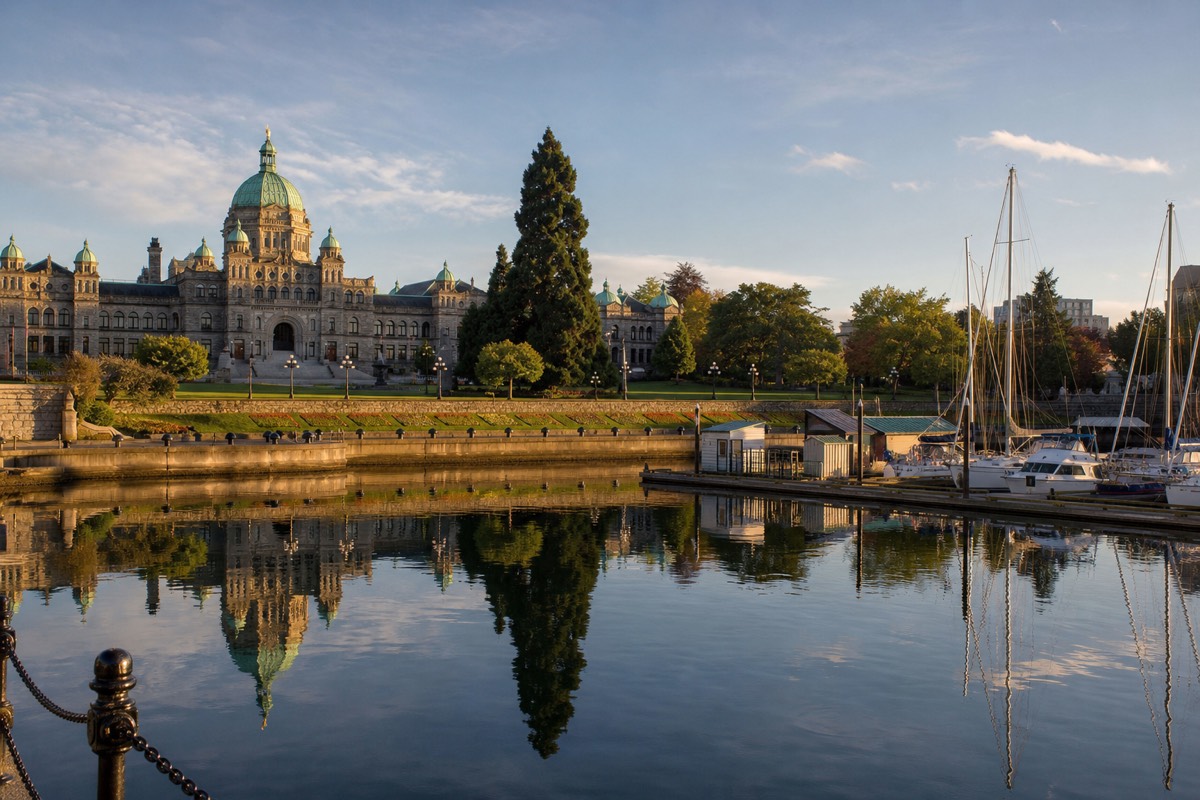
Victoria is one of the busiest cruise ports on the West Coast, and it is also one of the most misunderstood by the people sailing into it. Many passengers arrive expecting to step off into the middle of the city, then discover the terminal sits in a residential neighbourhood a few kilometres from the sights. A little planning turns that gap into an asset. This 2026 guide covers where ships dock, how to reach downtown, what actually fits into a short call, and the one decision that shapes the whole day.
What Your Hours Ashore Buy You in Victoria
A rough guide to what each length of port call allows once the transfer from Ogden Point is counted. Always plan backward from your ship's all-aboard time.
Where do cruise ships dock in Victoria?
Cruise ships dock at the Ogden Point terminal in the James Bay neighbourhood, about 3 kilometres southwest of the Inner Harbour and downtown Victoria. The terminal sits right on the water with a long breakwater beside it, but it is not within the sightseeing core, so every port day starts with a short transfer or a scenic walk into town.
Ogden Point is a working deep-water terminal, not a shopping mall wrapped around a pier. You will find taxis, tour coaches, pedicabs, a small visitor kiosk and washrooms, and the well-known Ogden Point breakwater, a long stone jetty that locals walk for the sea views and the murals along its base. Downtown itself, with the Parliament Buildings, the Empress and Chinatown, lies to the northeast, an easy transfer away rather than a step off the gangway.
Because so many arrivals here are compressed into a few hours, the single most useful thing you can do before you sail is decide in advance whether your day is a walk-the-harbour day or a get-out-of-town day. The rest of this guide is built around that choice.
What is there to do right at the terminal?
Right at Ogden Point you can walk the long breakwater for sweeping views across the Strait of Juan de Fuca to Washington's Olympic Mountains, see the murals painted along its base, and get your bearings at the visitor kiosk. It is a pleasant 20 to 30 minutes if your call is short or you simply want to stretch your legs before deciding on a plan.
The breakwater is the terminal's own attraction, a stone jetty reaching out into the strait that locals walk for the sea air and the horizon. Painted murals run along its landward base, and on a clear day the mountain views are the equal of anything you will pay for. There is a small visitor information point at the pier, washrooms, and usually a cluster of taxis, pedicabs and tour coaches waiting. If the weather is rough or your time ashore is very tight, an hour spent here plus a short stroll into the nearby James Bay streets is a perfectly good port call in its own right.
For anyone who wants to walk rather than ride, it also helps to know roughly how far the main sights sit from the pier. Treat these as approximate walking times, not exact figures.
| Sight | Rough walk from Ogden Point |
|---|---|
| Ogden Point breakwater | On site |
| Fisherman's Wharf | About 15 minutes |
| Beacon Hill Park | About 25 minutes |
| Inner Harbour and Parliament | About 35 to 45 minutes |
| Chinatown and Fan Tan Alley | About 45 minutes |
How do you get from Ogden Point to downtown Victoria?
You can reach downtown from Ogden Point on foot in about 35 to 45 minutes along the waterfront, or in 5 to 10 minutes by shuttle bus, taxi or pedicab. The walk along Dallas Road and the harbour is genuinely scenic in daylight, but an evening arrival makes the shuttle or a taxi the practical choice.
The walk is the local secret when ships are in during the day. Head northeast from the terminal and pick up the waterfront path along Dallas Road, past the clifftop views toward the Olympic Mountains, then follow the harbour around to the Parliament Buildings. It is flat, pretty, and free, and it drops you straight into the heart of the sightseeing. A seasonal shuttle bus usually runs between the terminal and the Inner Harbour on port days, taxis queue at the pier, and pedicabs offer a slower, chattier ride with commentary.
| Way into town | Time to downtown | Cost sense | Notes |
|---|---|---|---|
| Walk along the waterfront | 35 to 45 minutes | Free | Scenic in daylight, skip it after dark or in heavy rain |
| Shuttle bus | 5 to 10 minutes | Low, per person | Usually runs on port days, look for it at the pier |
| Taxi | 5 to 10 minutes | Moderate, per car | Best value split between a few people |
| Pedicab | 15 to 20 minutes | Higher, per ride | Slow, fun, with local commentary |
| City bus | 15 to 20 minutes | Lowest | Cheap but check return times against all-aboard |
Two things are worth flagging before you pick a mode. The waterfront walk is flat and paved, so it suits most walkers, but 3 kilometres each way is a real commitment on a short call, and doing it both directions can quietly consume half your time ashore. And if anyone in your group has limited mobility, skip the walk and take a taxi, which drops you at the harbour steps in minutes and is easily split between a few people. Match the mode to your hours and your legs, and the day starts on the right foot.
What can you realistically do with 4 hours ashore?
With about 4 hours ashore you can comfortably reach downtown, walk the Inner Harbour and Parliament Buildings, wander Chinatown and Fan Tan Alley, and grab a meal, or swap the walking for a harbour whale watching cruise. Four hours is not enough for Butchart Gardens unless it is your only stop and you go straight there.

Four hours sounds tight, and it is, but Victoria packs its best sights close together once you are downtown. A sensible short call looks like this: transfer into town, spend an hour around the Inner Harbour and the Parliament Buildings, walk three blocks up to Chinatown and Fan Tan Alley, eat, then browse Government Street back toward the harbour before your transfer back. That leaves a small buffer, which you want, because missing the all-aboard time is nobody's idea of a souvenir.
If wildlife is your priority, a three-hour whale watching cruise from the Inner Harbour can fit inside a longer call, but the timing is unforgiving on a four-hour stop once you add the transfers at both ends. Read the departure and return times carefully against your all-aboard, and only commit if the maths leaves a real cushion. Our companion piece on what to actually do with one day in Victoria maps the walking route step by step, and the wider things to do in Victoria guide covers each sight in more depth.
| Time ashore | What fits comfortably |
|---|---|
| 2 to 3 hours | Inner Harbour, Parliament Buildings, Fisherman's Wharf on foot |
| 4 hours | Add Chinatown and Fan Tan Alley and a downtown meal, or a harbour cruise |
| 6 hours | Butchart Gardens on a guided or shuttle transfer, or a longer wildlife tour |
| Full day | A guided day trip combining Butchart Gardens with a second stop |
What can you do with 6 hours or more ashore?
Six hours or more opens up Butchart Gardens, a longer whale watching trip, or a guided day tour that pairs the gardens with a second highlight. This is the window where leaving the downtown core pays off, because you finally have the buffer to absorb a transfer of 40 minutes or so each way.

Once you have six usable hours on the ground, the calculus changes. Butchart Gardens, about a 40 to 45 minute drive north of downtown, becomes realistic, especially if you book a transfer or a guided visit rather than piecing together city buses on a schedule you cannot control. The gardens reward two hours at a walking pace, and the guided version removes the risk of a missed connection eating your afternoon. Official hours and seasonal displays are posted at butchartgardens.com.
A longer call is also when the wild edges of the region come within reach. The west coast seals, rainforest and waterfall tour heads out to beaches, ancient cedars and wildlife beyond the city, though its full-day length only suits the very longest port calls or an overnight. For most cruise passengers the sweet spot is a guided half-day, and the Butchart Gardens and Malahat SkyWalk day trip is the natural fit, adding an elevated forest canopy walk with the transfers handled for you.
What does a sample port day look like?
A workable 4-hour call is a walking day: transfer into town, circle the Inner Harbour and Parliament, walk up to Chinatown to eat, then browse back. A 6-hour call is a leaving-town day: transfer or guided ride out to Butchart Gardens, roughly two hours in the gardens, then back to the ship with a buffer. The two plans below are starting points, not scripts.
The point of writing it out is to see how quickly the clock moves once transfers are counted at both ends. On a four-hour call, the transfers and a meal already claim most of your margin, which is why cramming in a second major sight so often backfires. On a six-hour call, a single out-of-town anchor fits comfortably, provided you protect the return leg.
| Time after all-ashore | 4-hour call | 6-hour call |
|---|---|---|
| First 30 minutes | Transfer into downtown | Transfer or guided ride toward Butchart |
| First 2 hours | Inner Harbour, Parliament, Chinatown | Arrive and start the gardens |
| Middle stretch | Lunch, Government Street browse | Roughly 2 hours in the gardens, a coffee |
| Final stretch | Transfer back with a buffer | Return transfer with a wide buffer |
Butchart Gardens or whale watching on a port day: which should you choose?
Choose Butchart Gardens if you want a relaxed, weatherproof-ish experience and have at least 6 hours ashore. Choose whale watching if wildlife is the reason you came and you have a firm cushion against your all-aboard time. Trying to do both on a single port day is the classic mistake, and it usually ruins both.
This is the fork in the road that decides your port day, so make it before you dock rather than at the pier. Butchart is a stroll through gardens with cafes, shelter and a fixed location, which makes it forgiving on a schedule. Whale watching is a boat that leaves and returns at set times and searches open water, which makes it thrilling but less flexible. Both are excellent. Neither pairs well with the other in a compressed window.
| Factor | Butchart Gardens | Whale watching cruise |
|---|---|---|
| Time needed ashore | About 6 hours with transfers | About 5 hours with transfers |
| Schedule risk | Lower, you control your pace | Higher, fixed departure and return |
| Weather sensitivity | Enjoyable in most conditions | Better in calm seas, cooler on the water |
| Best for | Gardens, gentle pace, all ages | Orcas, humpbacks, seals, photographers |
| Book ahead | Recommended in summer | Essential, capacity is limited |
If you are still weighing whether the gardens justify the transfer at all, we answer that directly in is Butchart Gardens worth it, and the season-by-season case for a cruise is in our whale watching guide for Vancouver Island.
If you cannot decide, let the calendar and the weather choose for you. Whale watching is at its most reliable from late spring through early autumn, so a summer call tilts toward the boat, while a shoulder-season call or a grey, blustery day tilts toward the shelter of the gardens. Families with young children often find Butchart the easier day, and keen photographers usually pick the water. Either way, book before you sail: both fill in peak season, and the pier is the wrong place to be searching for a same-day seat.
Should you book a cruise-line excursion or explore Victoria independently?
Book the cruise-line excursion if you want the guarantee that the ship waits for you and zero planning. Go independent if you want lower cost, more flexibility and a smaller group. The deciding factor is your appetite for risk: a ship-sponsored tour is held to the sailing time, an independent booking is not, so leave yourself a wide buffer.
The trade-off is real and worth thinking through. A cruise-line excursion is the safe default, because the ship will not leave without a delayed ship-sponsored group, and you never touch a map. The cost of that safety is a higher price, a larger coach and a fixed itinerary. Booking directly with a local operator typically costs less, runs in a smaller group and gives you a more personal day, and the way to manage the one downside, that the ship is not obligated to wait, is simply to choose a tour that returns you to the pier with plenty of margin.
| Consideration | Cruise-line excursion | Independent booking |
|---|---|---|
| Price | Higher | Lower |
| Ship waits if delayed | Yes | No, build in a buffer |
| Group size | Larger coach | Smaller, often private |
| Flexibility | Fixed itinerary | You choose the mix |
| Best for | Peace of mind, no planning | Value, smaller groups, personal pace |
Our team books small-group and private guided Victoria day tours that are timed for the sightseeing rather than the sales desk, and we build in the return buffer that a port day needs. To weigh the gardens as a guided visit against doing them yourself, see Butchart Gardens guided versus self-guided.
Is it worth getting off the ship in Victoria?
Yes, getting off the ship in Victoria is almost always worth it. Even a short evening call rewards a walk around the Inner Harbour, the lit-up Parliament Buildings and a downtown dinner, and a daytime call opens up gardens, whales and history. The only time to weigh staying aboard is a very brief stop in genuinely bad weather.
Victoria makes a strong case for stepping off because its best first impressions sit so close to the terminal. The harbour, the Old Town and Chinatown are compact and photogenic, the city is safe and easy to navigate on foot, and the atmosphere on the causeway in season is a highlight in itself. Passengers who stay on the ship usually do so because they assumed the port was far from anything, which the walkable core quickly disproves. Set a realistic goal for your hours, keep a buffer against the all-aboard, and a Victoria call becomes one of the more memorable stops of an Alaska or Pacific Northwest sailing rather than a throwaway.
When do cruise ships arrive in Victoria, and does an evening call change things?
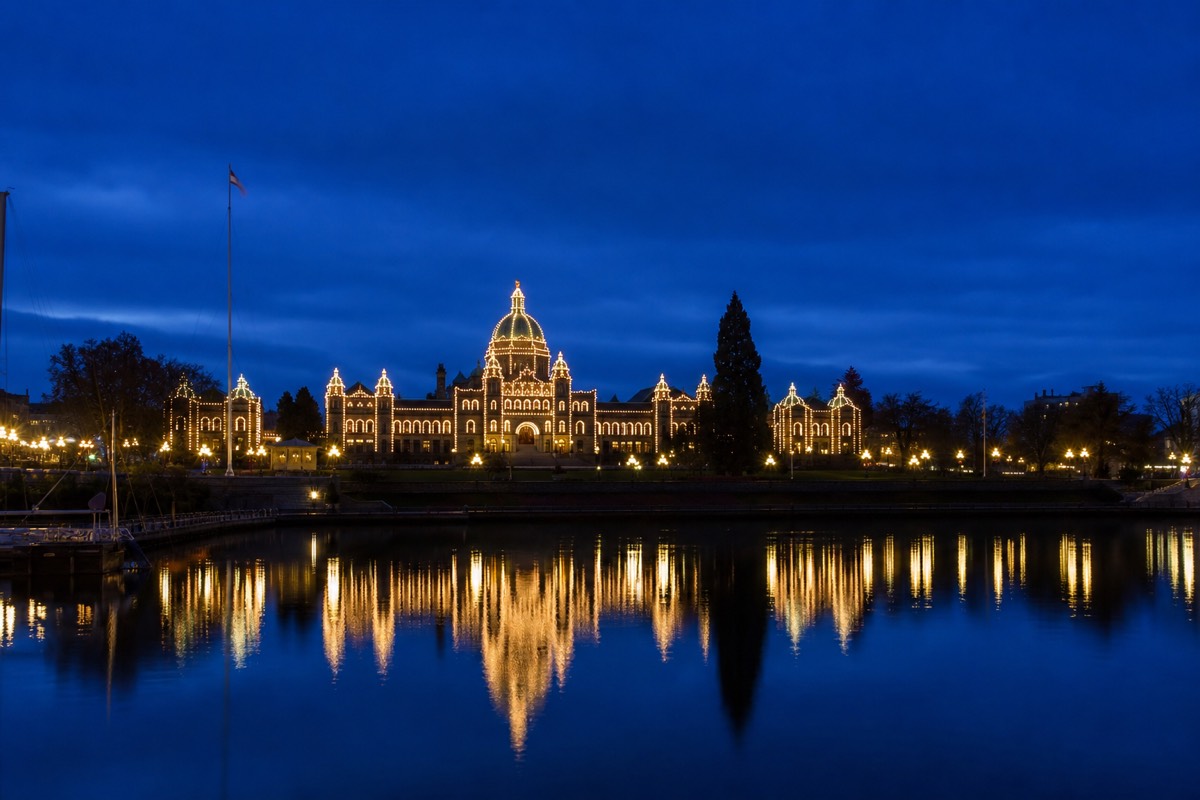
Many Victoria calls, especially round-trip Alaska sailings out of Seattle, arrive in the late afternoon or evening and stay only a few hours before a late-night departure. That changes everything: gardens and museums may be closing, so an evening call favours the harbour walk, dinner and the lit-up Parliament Buildings rather than a trip out to Butchart.
Victoria is famously an evening stop on a large share of Alaska itineraries, because round-trip cruises from Seattle need a foreign port call and Victoria is the convenient one on the way home. If your ship docks at, say, 6 or 7 in the evening, treat the night as its own kind of highlight rather than a shortened day version of a full call. The Inner Harbour is at its best after dark, the Parliament Buildings glow with thousands of lights, the causeway keeps its buzz in summer, and Victoria's restaurants are open. Save Butchart, the whale boats and the castle for a daytime port, and lean into a relaxed evening ashore.
Knowing what stays open shapes an evening call. Restaurants, pubs and the harbour itself run late, and the Parliament lights and causeway are free and always on, so a food-and-stroll evening needs no advance booking. Major attractions are the catch: the gardens, the museum and the whale boats keep daytime hours, so an evening arrival is the wrong time to plan around them. If your itinerary lists a late Victoria stop, mentally file the gardens and wildlife under a future daytime visit and let the harbour carry the night.
Whatever your arrival time, check your specific ship's schedule and the posted all-aboard, and plan backward from it. The season itself runs roughly spring through autumn, with the busiest calls in the warmer months.
| Cruise season window | Typical pattern | Weather |
|---|---|---|
| April to May | Season ramps up, quieter port days | Mild, changeable, pack a rain shell |
| June to August | Peak calls, many evening arrivals | Warmest and driest, long daylight |
| September to October | Busy into early autumn, calmer town | Mild, rain builds later in the window |
What should you know before stepping off the ship?
Victoria is safe, walkable and English-speaking, with Canadian dollars as the currency and easy card payment almost everywhere. The main things to sort before you disembark are your transfer plan, your all-aboard time, layered clothing for changeable weather, and any tour booked in advance rather than scrambled for at the pier.
A word on documents and money, since most of Victoria's cruise passengers arrive from the United States. Victoria is in Canada, so carry whatever travel documents your cruise line requires for the port, which for most visitors means a passport. Payment is easy: cards work almost everywhere and prices are in Canadian dollars, so you rarely need cash beyond a tip or a pedicab fare. Mobile coverage is good downtown, though it is worth checking your roaming plan before you lean on data ashore.
A few practicalities make the day smoother. Cards work almost everywhere, so you rarely need cash, though a little Canadian currency is handy for a pedicab or a tip. The weather turns quickly even in summer, so a light waterproof layer earns its place in your day bag. Sights near the harbour are clustered, but Butchart and the whale boats reward a booking made before you sail, not after. And if food is on your mind, skip the harbour tourist strip and walk a few blocks: our guide to where locals eat in Victoria BC points you to the neighbourhoods that Victorians actually use. Some passengers even build a Victoria day around an independent fast-ferry arrival from Seattle rather than a cruise; the operator information for that route is at clippervacations.com, and broader trip-planning for the region is collected at vancouverisland.travel.