Vancouver to Victoria: Ferry vs Seaplane vs Guided Day Trip
Two very different machines make the same run across the Salish Sea, and a guided coach makes it a third way. Here is how the ferry, the seaplane, and the day trip compare on cost, time, and how much of your day each one takes.
Compare the crossing around your actual day. A guided trip bundles ferries, Victoria, and Butchart Gardens from Vancouver. Check complete Victoria day-trip dates
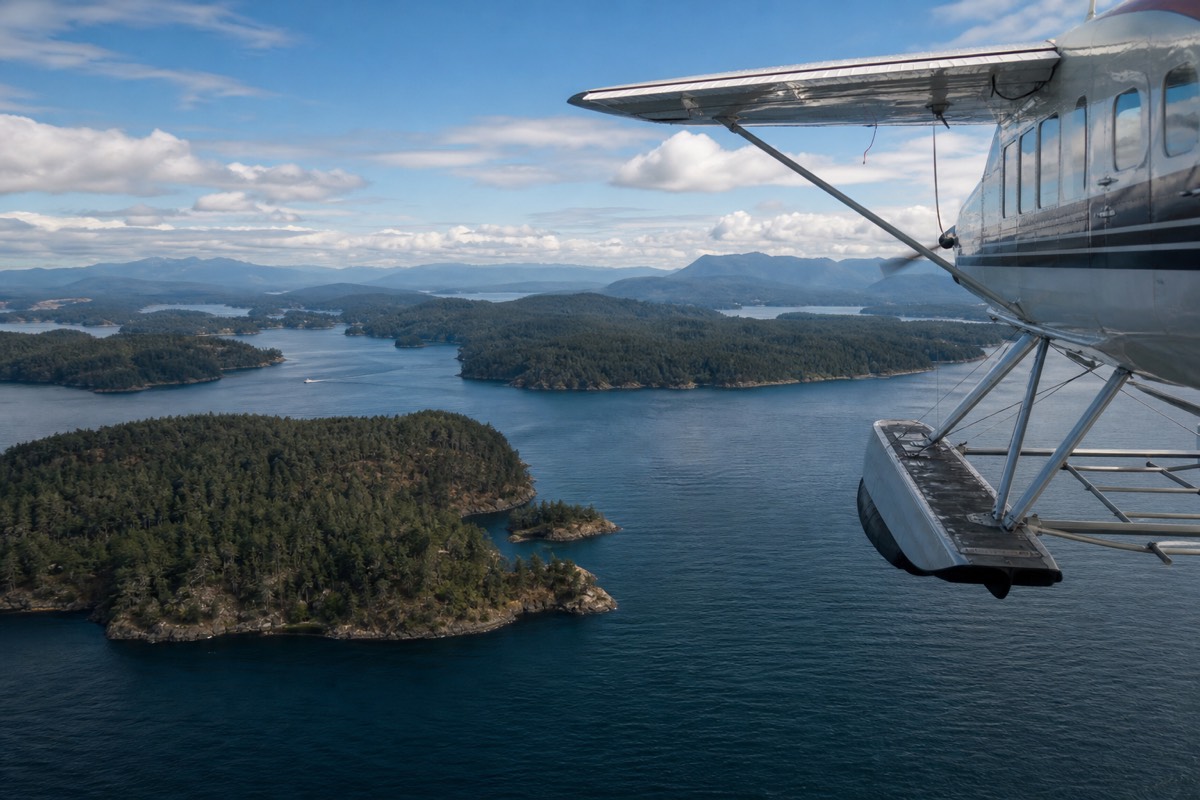
Two very different machines make the same trip across the Salish Sea. One is a floatplane that lifts off Vancouver's downtown harbour and sets down in Victoria's Inner Harbour about thirty five minutes later. The other is a car ferry the size of a small town that threads the Gulf Islands for an hour and thirty five minutes. Both land you in Victoria, and choosing between them is often the first real decision of a Vancouver Island trip.
The good news is that the choice is not complicated once you see the trade clearly. The seaplane sells time and a view from the air. The ferry sells value and a slower scenery of its own. A guided day trip sells the thing many first-timers want most, which is not having to think about any of it. This guide sets the three side by side so you can pick the one that fits your day, your budget, and how much of it you want to spend planning.
Quick answer: the ferry from Tsawwassen to Swartz Bay is the cheapest and most scenic crossing, at roughly $20 to $22 CAD on foot for a sailing of one hour and thirty five minutes, though both terminals sit outside the city cores. A seaplane is far faster at about 35 minutes harbour to harbour and lands you in the middle of Victoria, for a premium fare. A guided day trip from Vancouver, currently from around $244 per person, folds the crossing, the city, and Butchart Gardens into one organised day. Choose the ferry for value, the seaplane for speed, and the guided tour to skip the planning.
Ferry, seaplane, and guided day trip compared at a glance
How the ferry, seaplane, and guided day trip stack up on time, cost, where they land you, and who each one suits. Treat prices as planning allowances.
Ferry or seaplane to Victoria: which should you choose?
Take the ferry if cost and scenery matter more than speed, and take the seaplane if you would rather be in downtown Victoria in about 35 minutes than spend a chunk of the day in transit. The ferry wins on price by a wide margin, the seaplane wins on time and drops you in the heart of the city, and a guided day trip beats both when you want the crossing, the sights, and the timing handled for you.
There is no single right answer, because the best crossing depends on what you are doing once you land. A couple spending three nights in Victoria and never leaving the south end wants a very different setup from a family crossing over for one long day. Four questions settle it: how much time you have, how much you are willing to spend, whether you need a car once you arrive, and whether you are staying over or coming back the same day.
Distance frames the rest. Vancouver Island runs about 460 kilometres along the coast, and Victoria sits at the sheltered southeast tip, an easy crossing from the mainland. If your plans stay in and around the capital, any of these three options works and the decision comes down to time and money. If you are heading up-island or out to Tofino on the wild west coast, roughly 315 kilometres away, the crossing is only the first leg and a car starts to earn its place. This page focuses on the Vancouver to Victoria decision itself; for every route across, including flights, the helicopter, and the Hullo fast ferry to Nanaimo, see our full breakdown of how to reach Vancouver Island.
| Option | Crossing time | Typical cost, one way | Lands you | Best for |
|---|---|---|---|---|
| Ferry, on foot | 1 h 35 min sailing | About $20 to $22 CAD | Swartz Bay, 30 to 45 min north of Victoria | Value and day-trippers without a car |
| Ferry, with a car | 1 h 35 min sailing | About $55 to $75 CAD per vehicle, plus passengers | Swartz Bay | Touring beyond Victoria |
| Seaplane | About 35 min | Premium | Victoria's Inner Harbour, downtown | Speed and special occasions |
| Helicopter | 30 to 40 min | Highest | Central Victoria | The fastest crossing, a splurge |
| Guided day trip | Full day, crossing included | From around $244 per person | Hotel to hotel | A day trip with zero planning |
How does the ferry from Vancouver to Victoria work?
You cross with BC Ferries from the Tsawwassen terminal south of Vancouver to Swartz Bay, a sailing of one hour and thirty five minutes through the southern Gulf Islands. Foot passengers pay roughly $20 to $22 CAD each way and can usually board on the day; a vehicle runs about $55 to $75 CAD on top of passenger fares. Swartz Bay is 30 to 45 minutes north of Victoria, so the door-to-door time is longer than the sailing alone.
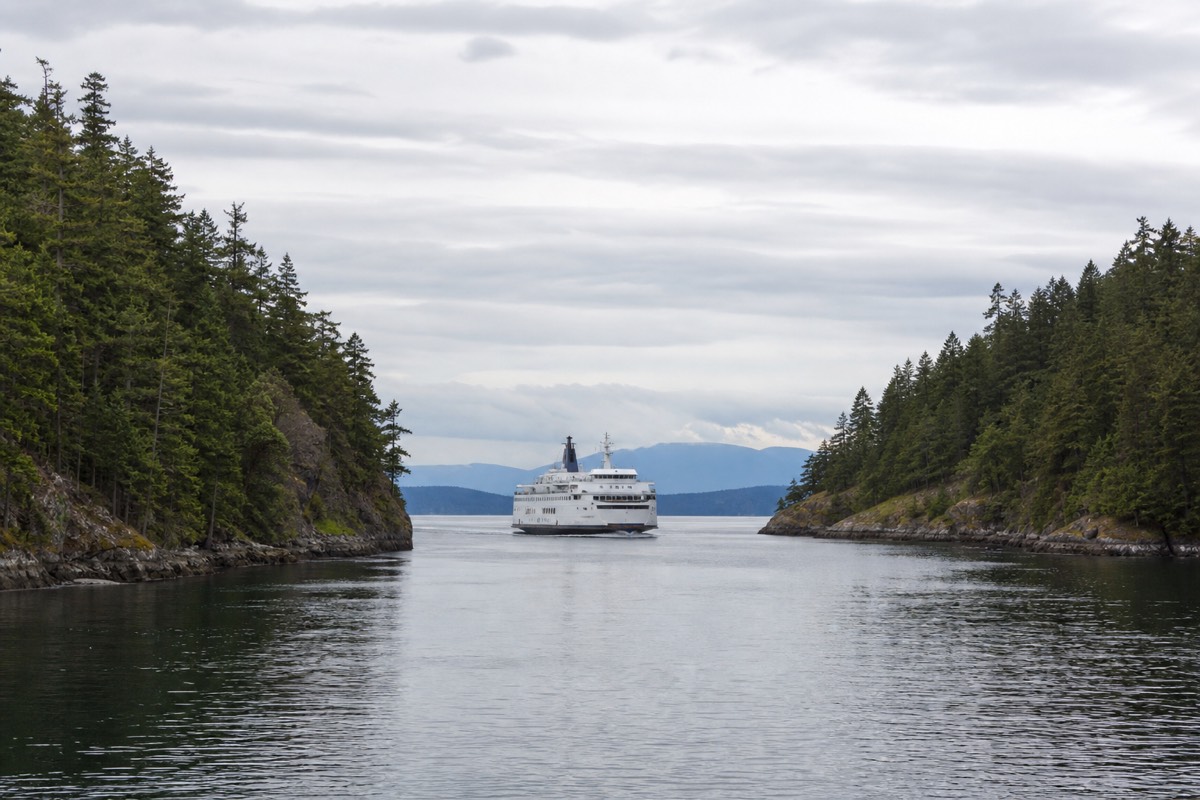
The Tsawwassen route is the busiest ferry crossing in British Columbia, and it earns its reputation on the water. The boat threads Active Pass, a current-swept narrows where the shorelines close in near enough to pick out individual docks and houses, and resident bald eagles work the ridgelines above. The passage is the traditional territory of the Coast Salish peoples, and these channels were the main Indigenous travel corridor on this coast for thousands of years before any vessel ran to a timetable. Head up to the outer decks rather than staying below, because the morning light on that water is one of the quietly beautiful half-hours in BC travel.
The part first-timers underestimate is the terminals. Tsawwassen is about 45 to 60 minutes from downtown Vancouver, and Swartz Bay is another 30 to 45 minutes from Victoria, so the real crossing time is closer to three hours than to ninety minutes once you add both drives. You can check sailing times and fares and reserve a vehicle at BC Ferries directly. Vehicle reservations are held until 30 minutes before departure, so reach the terminal with a comfortable buffer rather than sprinting for the loading lane.
| Segment | Typical time or cost | Notes |
|---|---|---|
| Downtown Vancouver to Tsawwassen | 45 to 60 min | By car or taxi; transit takes longer |
| Sailing, Tsawwassen to Swartz Bay | 1 h 35 min | Through the southern Gulf Islands |
| Swartz Bay to Victoria | 30 to 45 min | By car, bus, or shuttle |
| Foot passenger fare | About $20 to $22 CAD each way | Usually no reservation needed |
| Vehicle fare | About $55 to $75 CAD per vehicle | Passenger fares on top; reserve in summer |
How does the seaplane to Victoria work?
A seaplane flies from downtown Vancouver's Coal Harbour to Victoria's Inner Harbour in about 35 minutes, landing you in the middle of the city rather than at a terminal outside it. It costs several times the ferry fare and carries no cars, but it skips both terminals and the drives to reach them, so the real time saving is larger than the flight time alone suggests.
The route is the reason people book it as much as the speed. The floatplane sweeps over Stanley Park and Lions Gate Bridge, then crosses the Strait of Georgia with the Gulf Islands laid out below, and sets down on the water beside the Parliament Buildings. It is a completely different sense of the coast's scale than any ferry deck gives you, and for anyone marking an occasion, the flight is the highlight rather than the means to one.
Because the seaplane lands downtown, it suits a Victoria-focused trip especially well: you step off the dock and you are already where you want to be, a short walk from the harbour, the hotels, and the start of most city walks. The most popular way to use it is to build it into a full day. The seaplane and whale watching day trip pairs the 35-minute flight with a three-hour cruise on the Salish Sea searching for orcas, humpbacks, and seals, currently from around $558 per person, so check the live listing for your date. If wildlife is the main reason you are crossing, our overview of whale watching from Victoria covers where and when sightings are most reliable.
One honest caveat separates the seaplane from the ferry: it flies on the weather. Floatplanes need reasonable visibility, so a low-cloud winter morning or thick harbour fog can push a departure back, and there are fewer flights outside the summer season. The operators watch conditions closely and rebook when they must, but if you are travelling in the shoulder or winter months, keep a little slack in your plans rather than connecting a flight straight into a fixed appointment. In clear summer weather, which is most of June through September, the crossing runs like clockwork.
| Detail | Seaplane |
|---|---|
| Departs | Coal Harbour, downtown Vancouver |
| Arrives | Victoria's Inner Harbour, downtown |
| Flight time | About 35 minutes |
| Terminal time | Minimal, no shuttle at either end |
| Carries cars? | No, passengers only |
| Cost tier | Premium, several times the ferry fare |
Ferry vs seaplane: the real cost and time difference?
The seaplane saves you the better part of two hours each way, while the ferry saves you the better part of a hundred dollars per person. For a couple on a budget the ferry is the obvious pick; for a traveller whose day is short or whose trip is a celebration, the seaplane buys back hours that would otherwise vanish into terminals and drives. Neither is wrong, they simply price time and money differently.
Set the two against each other honestly. The ferry, door to door, is roughly three hours of travel each way once you add the terminal drives, at around $20 to $22 CAD on foot. The seaplane is about 35 minutes plus a few minutes at each dock, for a premium fare that can run several times higher. On the way over you trade money for time; on the way home the same trade repeats. If you are crossing as a couple or a family, multiply the seaplane premium by every seat and the ferry's value case grows quickly. If you are travelling alone on a tight schedule, the flight's time saving is often worth every dollar.
The price ladder below gathers the real figures in one place. Tour prices come from the current listings and move with season and demand, so read them as planning allowances and confirm the live price before you book.
Here is the trade made concrete. Two travellers crossing on foot pay roughly $40 to $44 CAD between them each way and reach Victoria in about three hours door to door. The same two on a seaplane are downtown in about 35 minutes, but they pay the premium twice, once per seat, in each direction. Over a return trip the gap can run into hundreds of dollars for a couple, which is real money toward a night on the island or a whale watching cruise. Spend it when the hours matter more than the dollars, and keep it when they do not.
| Way across | Typical price | What it includes |
|---|---|---|
| Ferry, on foot | About $20 to $22 CAD each way | The sailing only; add the drive at each end |
| Ferry, with a car | About $55 to $75 CAD per vehicle each way | The vehicle; passenger fares on top |
| Guided Victoria and Butchart day trip | From around $244 per person | Both ferry crossings, guided city tour, and Butchart Gardens admission |
| Seaplane and whale watching day trip | From around $558 per person | The 35-minute flight and a three-hour whale watching cruise |
| Private Vancouver to Tofino, 2 days | From around $1,938 per group | The crossing, the drive, accommodation, and guided stops |
When is a guided day trip the better choice than doing it yourself?
A guided day trip wins when you want to see Victoria and Butchart Gardens in one day without renting a car, timing the ferry, or planning a route. From around $244 per person it bundles both crossings, a guided walk through the Inner Harbour, free time in the city, and the gardens into a single organised day, and it removes the friction that turns a self-drive day trip into a logistics exercise.

The reason so many first-timers choose it comes down to arithmetic. A self-drive day trip from Vancouver leaves only four to six hours actually on the island against 12 to 14 hours of round-trip travel, because the return sailing alone eats over three hours before you count the terminal drives and loading. A guided tour does not shorten the crossing, but it does mean you are not the one watching the clock, finding parking in downtown Victoria, or working out how to reach Butchart Gardens, which sits 20 kilometres outside the city.
What that organised day actually contains is a fair amount. A typical run picks you up at a downtown Vancouver hotel in the early morning, crosses on the ferry with the guide briefing the day during the sailing, then walks you through Victoria's Inner Harbour past the Parliament Buildings and the Empress, with free time for lunch and a wander before the afternoon at Butchart Gardens. The gardens alone, 55 acres across themed Sunken, Rose, Japanese, and Mediterranean sections, take a good couple of hours, and arriving in the afternoon means the morning coach crowds have thinned. You are back in Vancouver by mid-evening, having seen the headline sights without once reading a ferry schedule.
The guided Victoria and Butchart Gardens day trip is the most booked way to do exactly this, with the ferry, the city, and the gardens built into one day and admission included. If you are travelling up-island rather than just to Victoria, a private two-day run to Tofino carries the crossing and the long west-coast drive for you across two days. And if a single day really is all you have, our plan for making the most of one day in Victoria helps you spend it well. To compare formats, browse the full range of guided day trips that leave from Vancouver.
| Approach | How it works | Time actually on the island | Best for |
|---|---|---|---|
| Self-drive plus ferry, same day | Cross Tsawwassen to Swartz Bay and back | Only 4 to 6 hours | Independent travellers happy with a very long day |
| Seaplane, same day | Fly over, more hours in the city | Meaningfully more | Those who value time over cost |
| Guided day tour | Crossing, transport, and stops all handled | A full guided day | First-timers, no car, no planning |
Which crossing is best for your trip?
Match the crossing to the shape of your trip. Day-trippers without a car do best on a guided tour or the seaplane; couples staying over in Victoria save most on the foot-passenger ferry; families weigh the seaplane premium against several seats; and anyone heading beyond the south end wants a car on the ferry. There is a right answer for each traveller, and it rarely comes down to the same crossing twice.
The table below turns the decision into a lookup. Find the row that sounds most like your trip and the crossing on the right is the one our team would suggest starting with, then adjust for budget and dates. For a Victoria-first visit, our guide to what to do once you reach Victoria pairs naturally with any of these crossings, and if you are still deciding how long to give the island, read how many days the island really needs before you lock in a single hurried day.
A few combinations come up again and again. Solo travellers on a fixed schedule tend to fly over and ferry back, spending on the outbound flight to gain a full day and saving on the relaxed evening return. Couples often take the ferry both ways and treat the crossing as part of the holiday rather than a cost to trim. Families almost always land on the ferry or a guided coach, because a seaplane seat multiplied by four or five rewrites the budget in one line. Read your own trip against those patterns and the crossing usually picks itself.
| Your trip | Best crossing | Why |
|---|---|---|
| Day trip, no car, no planning | Guided day tour | Crossing, city, and gardens handled in one day |
| Short day, budget is not the issue | Seaplane | Buys back the hours a ferry day trip loses |
| Couple staying two or three nights in Victoria | Ferry on foot | Cheapest crossing; Victoria is walkable |
| Family with kids | Ferry on foot, or a guided tour | The seaplane premium multiplies per seat |
| Special occasion or celebration | Seaplane | The flight itself is the highlight |
| Touring up-island or out to Tofino | Ferry with a car | You need wheels once you land |
How far ahead should you book?
Book vehicle space on the ferry two to four weeks ahead for June through September, the peak on the busiest route in the province. Foot passengers can usually walk on the same day year-round. Seaplane seats and guided tours are finite and fill from confirmed bookings in summer, so reserve those before your dates are fixed, especially for the seaplane and whale watching day trip, where a small flight and a separate vessel both have to be coordinated.
Summer weekends are when the Tsawwassen sailings fill, and they fill from confirmed vehicle reservations rather than at the ramp, so if your dates are set and you are bringing a car, plan for that. Walk-on passengers have far more slack, which is one more quiet argument for crossing on foot when a Victoria-only trip allows it. Remember that a held ferry reservation is released 30 minutes before the sailing, so a buffer at the terminal is not optional in high season.
The seaplane and the guided tours work differently. Seats are limited by aircraft and vessel capacity, and the coordinated products, above all the flight paired with a whale watching cruise, cannot be assembled on arrival the way a walk-on ferry ticket can. If you are coming from the United States rather than from Vancouver, the map changes entirely and you would cross to Victoria from Seattle or Port Angeles instead. For destination background beyond the logistics, the regional resource at Vancouver Island Travel is a solid starting point, and the wider picture of the island itself helps put the two coasts in context before you choose how to cross.
| Season | Ferry on foot | Ferry with a vehicle | Seaplane and guided tours |
|---|---|---|---|
| June to September | Usually board same day | Reserve 2 to 4 weeks ahead | Book well ahead, seats fill |
| Shoulder, April to May and October | Walk on | Book a few days ahead | Book a week or two ahead |
| Winter | Walk on | Usually fine day-of | Fewer departures, still reserve |
Put it together and the crossing stops being the hard part. Decide what your day is worth against what a seat costs, pick the option that matches how you want to move around Victoria, and reserve early if you are bringing a car in summer or booking a coordinated seaplane day. The strait is only a barrier until you are on it. After that, whichever way you chose, it becomes the reason Victoria feels like a place apart from the mainland it faces.