Goldstream Park & the Salmon Run Near Victoria
Half an hour from Victoria, an old-growth river fills with spawning salmon every autumn, and the bald eagles that follow them turn a quiet park into one of the island's great free wildlife shows. Here is when to go and what to expect.
Keep Goldstream free or join a guided day. One Victoria itinerary adds its forest and waterfall, SkyWalk and Hatley Castle. Explore the guided Goldstream and Malahat day
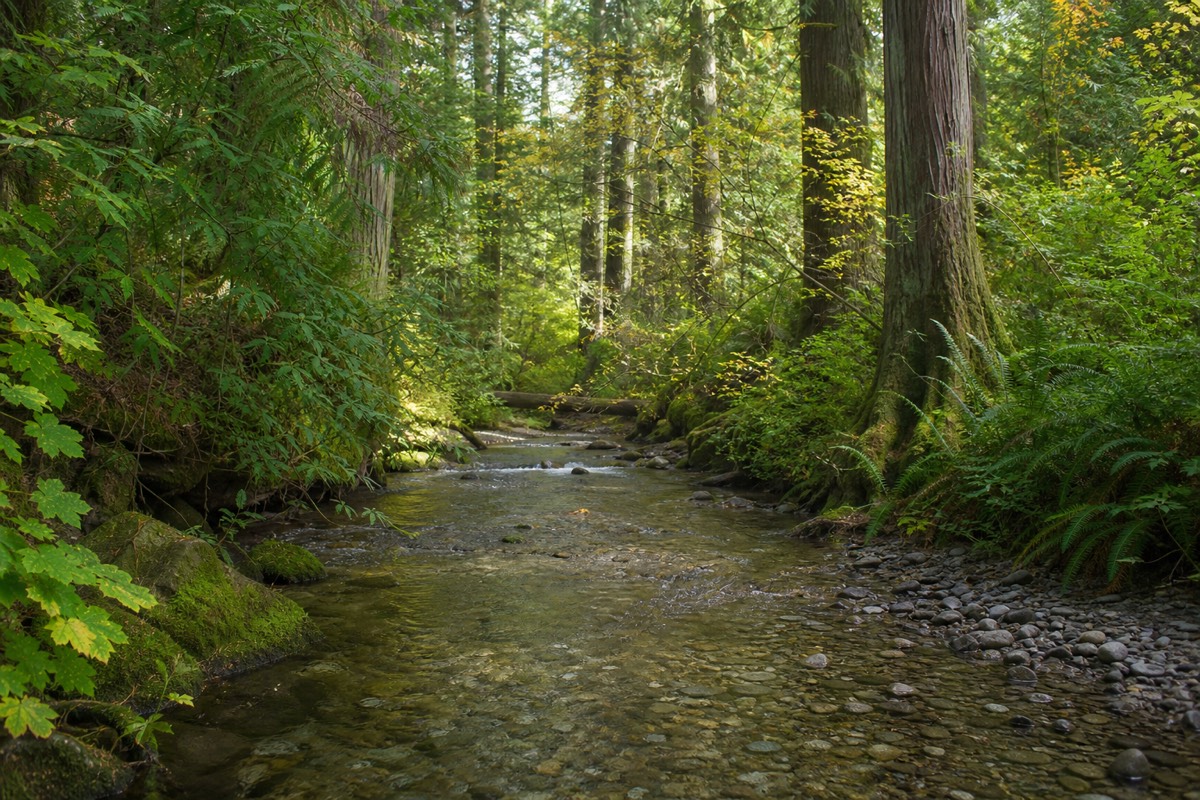
Most of the year, Goldstream is a shady green river valley you could drive past without a second thought. Then autumn arrives, the rains lift the river, and thousands of salmon push up out of the sea to spawn and die in the gravel where they hatched. The smell reaches you before the sight does. Along the banks, bald eagles line the branches and pick over the shallows, and a park twenty minutes from downtown Victoria becomes one of the most watchable wildlife events on southern Vancouver Island, all of it free.
Goldstream Provincial Park is a rare thing: a genuine old-growth pocket, a waterfall, a river estuary and a seasonal wildlife spectacle, all within an easy drive of the capital. This guide covers what the park holds, when the salmon run, when the eagles follow, the trails and viewpoints, how to get there, and how to build a day around it.
When the salmon and eagles show up at Goldstream
Timing is a planning allowance. The salmon usually push upriver from mid-autumn, and eagle numbers build once the spawned-out fish are lying in the shallows, but a wet or dry year moves the dates around.
What is Goldstream Provincial Park?
Goldstream Provincial Park is a forested river valley about thirty minutes north of Victoria on the Malahat, part of Highway 1. It protects a stretch of the Goldstream River lined with old-growth Douglas firs and western red cedars, a modest waterfall, and a tidal estuary. It is best known for the autumn salmon run and the bald eagles that gather to feed on it.
The park is unusually varied for its size. Down by the day-use area, big old trees shade the river and a short trail leads to Goldstream Falls, a pretty cascade rather than a giant. Follow the valley the other way and the freshwater river opens into a saltwater estuary where the salmon arrive from the sea. That mix of old forest, moving water and estuary is what makes the place feel wilder than its short distance from Victoria suggests.
Goldstream also carries a slice of island history in its name. The river drew prospectors during a small nineteenth-century gold rush, and old mine workings still lie in the surrounding hills, which is why a couple of the park's trails carry mining names. Today the draw is nature rather than gold, and the autumn salmon run is the headline. For the falls themselves and how they compare with the island's bigger drops, see our guide to Vancouver Island's best waterfalls.
| Detail | Goldstream at a glance | |
|---|---|---|
| Where | On the Malahat, Highway 1 | About 30 minutes north of Victoria |
| What it protects | Old-growth forest, the Goldstream River, an estuary | Plus Goldstream Falls |
| Signature event | Autumn chum salmon run | Followed by gathering bald eagles |
| Effort | Short, mostly easy trails | A waterfall walk and riverside paths |
| Cost | Free provincial park, day use | No ticket to watch the run |
| Facilities | Day-use area, picnic spots, a nature centre in season | Campground nearby |
When is the salmon run at Goldstream, and what will you see?
The salmon run at Goldstream usually runs from October into December, with the heaviest spawning typically in late October and November. You will see thousands of salmon crowding the shallow river, jostling over the gravel, spawning and then dying, their bodies lining the banks. It is raw and it smells, and it is one of the most memorable free nature experiences near Victoria.
Treat those dates as a planning allowance rather than a timetable. The run is triggered by autumn rains lifting the river, so a wet October can bring the fish early and a dry one can hold them back. In a strong year the water seems to boil with fish; in a lean one it is quieter but still worth the trip. The park is at its busiest with visitors on autumn weekends, so a weekday morning gives you the riverbanks with more room.
What surprises first-timers is how close and unfiltered it is. You stand at the river's edge and watch the full cycle a few feet away, spawning fish alongside spent ones, with gulls and eagles working the shallows. It is nature without a fence around it, which is exactly the appeal. If you are timing a wider island trip around wildlife and weather, our guide to the best month to visit Vancouver Island puts the autumn run in context with the rest of the year.
There is a bigger story playing out than a crowd of fish. Each salmon spends years at sea, then returns to the exact stream where it hatched, spawns once, and dies within days. Those spent bodies are not waste: they feed the eagles and gulls, fertilise the streamside forest, and seed the next generation in the gravel. Watching the run at Goldstream is watching that whole cycle compressed into a few autumn weeks, which is why it lands harder than a simple wildlife sighting.
| Month | What is happening | Worth it? |
|---|---|---|
| September | Fish beginning to stage near the estuary | Early, hit or miss |
| October | Salmon pushing upriver as the rains build | Good, and building |
| November | Peak spawning in the shallows | The classic time to go |
| December | Run tailing off, spent fish in the river | Still active; eagles increasing |
| January | Salmon over, eagle feeding at its height | Go for the eagles |
Which salmon species run in the Goldstream River?
Goldstream is best known for its chum salmon, sometimes called dog salmon, which make up the bulk of the autumn run. Smaller numbers of coho and chinook also return to the river. Chum are the ones you will see crowding the shallows in their thousands, and their late arrival is what sets the November peak.
The chum are the show. They arrive in large numbers, spawn in the gravel of the lower river, and die within days, completing a cycle that feeds the whole valley from the eagles down to the forest soil. Coho and chinook are present too but in far smaller numbers, so the crowd of fish you photograph is almost certainly chum. Understanding which fish you are watching also helps explain the timing: chum tend to run later than many other Pacific salmon, which is why the Goldstream peak lands deep in autumn rather than late summer.
Salmon are the backbone of the coast's food web, and the run here is a compact lesson in why. The same fish that draw eagles to Goldstream draw black bears to rivers and shorelines elsewhere on the island, a link our guide to bears on Vancouver Island explains in more detail. If you want to catch rather than watch salmon, the seasons and species vary by region, and our guide to salmon fishing on Vancouver Island breaks down where and when.
| Species | Also called | At Goldstream | Typical timing |
|---|---|---|---|
| Chum | Dog salmon | The main event, in the thousands | Late October into December |
| Coho | Silver salmon | Smaller numbers | Autumn |
| Chinook | King or spring salmon | A modest presence | Autumn |
When do the bald eagles arrive at Goldstream?
The bald eagles build up as the salmon run winds down, usually from December into February, feeding on the spawned-out fish left in the shallows. This eagle season is a separate reason to visit, arriving just after the peak of the spawning itself. On a good winter day you can count dozens of eagles in the trees and along the riverbanks.
It helps to think of Goldstream as two overlapping shows. The salmon peak in autumn, then the eagle gathering peaks a little later in winter as the birds move in to clean up the dead and dying fish. If your main goal is eagles, aim for the weeks after the run rather than the height of it. Bring binoculars, dress for cold and damp, and give the birds room, because a crowd pressing too close will push them off the river.
Numbers vary year to year with the size of the run, so some winters draw many more birds than others. Even in a quieter season, the sight of a bald eagle dropping to the shallows for a spent salmon a short walk from a city the size of the capital is the kind of thing that stops people mid-sentence. The first hours of daylight tend to be the most active, before weekend crowds build along the banks, so an early start pays off for eagles as much as for the fish.
The park's nature centre, open in the busier season, is a good first stop for current sightings and to get oriented before you walk the riverbank. Rangers and volunteers there can point you to where the fish and birds are concentrated on the day, which changes week to week.
How do you watch the salmon run respectfully?
Stay on the marked paths and out of the river, keep dogs leashed, give the eagles a wide berth, and leave every fish where it lies. The salmon run is a working part of the ecosystem, not a display, and the spawning fish, their eggs in the gravel, and the birds feeding on them are all easily disturbed. Watching quietly from the bank is the whole experience.
The single most important thing is to keep out of the water. Spawning salmon lay their eggs in shallow gravel nests, and a careless footstep can crush a nest that holds next year's fish. Wading among the fish also stresses them at the most fragile moment of their lives, so the bank and the boardwalks are where you belong. Resist the urge to move or handle a fish, alive or dead, because the carcasses are food for the eagles and fertiliser for the forest, and removing them takes from both.
The birds ask for the same restraint. Bald eagles will abandon a feeding spot if people crowd it, so hang back, use binoculars or a long lens, and let them work the shallows undisturbed. Keep dogs leashed throughout, both for the wildlife and because a loose dog near a river full of decaying fish is a recipe for trouble. The smell of the run is strong and entirely natural, part of the cycle rather than a sign anything is wrong, so come prepared for it rather than surprised by it.
| What to do | Why it matters |
|---|---|
| Stay on paths and boardwalks | Protects the gravel nests and the riverbank |
| Keep out of the river | Wading crushes eggs and stresses spawning fish |
| Leash dogs | Keeps wildlife safe and dogs out of the carcasses |
| Give eagles a wide berth | Crowding pushes them off their feeding spots |
| Leave every fish where it lies | Carcasses feed the eagles and the forest |
| Pack out everything you bring | Keeps the estuary clean for wildlife |
What are the trails and things to do at Goldstream?
Beyond the salmon viewing, Goldstream has short trails to a waterfall, along the river, and out to the estuary, plus picnic areas and a campground. The walk to Goldstream Falls is a quick, mostly flat stroll through old forest, and the estuary boardwalk near the nature centre is the prime salmon and eagle viewing spot. None of it needs serious hiking.
For a first visit, the two things to do are walk to the falls from the day-use area and then head to the estuary side for the wildlife. Goldstream Falls is a modest cascade in a mossy setting, a pleasant reward for a short walk rather than a headline in its own right. The estuary, on the other hand, is where the salmon-run drama concentrates, so that is where to linger in autumn and winter.
| Trail or spot | Roughly how long | Terrain | Good for |
|---|---|---|---|
| Goldstream Falls trail | Short, a few minutes each way | Mostly flat forest path | An easy waterfall stop |
| Riverside paths | Short strolls | Level, near the water | Watching the salmon spawn |
| Estuary and nature centre | Short walk and boardwalk | Flat, accessible in parts | Salmon and eagle viewing |
| Upper trails and mine relics | Longer, uphill in places | Forest trail, some climbing | A quieter walk with history |
Goldstream also has a campground on the valley floor, which makes it a handy first or last night for anyone touring the island by vehicle. If that is your plan, our guide to campervanning Vancouver Island covers booking park sites and moving a vehicle across on the ferry.
How do you get to Goldstream Park from Victoria?
Goldstream sits on Highway 1, the Malahat route, about thirty minutes north of downtown Victoria by car. It is signposted, with day-use parking near the trails and separate access for the estuary and nature centre. There is no direct city transit to the trailheads, so most visitors drive, join a tour, or arrange a taxi.
The drive itself is straightforward, climbing out of Victoria onto the scenic Malahat, and the park entrances are well marked. In autumn the day-use lots fill fast on weekends, so an early start pays off. Visitors coming from the mainland can reach the park as part of a day on southern Vancouver Island; for the crossing options and timings, see our guide to getting to Vancouver Island.
| From | Approx. time | How | Notes |
|---|---|---|---|
| Downtown Victoria | About 30 minutes | Drive the Malahat, Highway 1 | Day-use parking at the trailheads |
| Swartz Bay ferry | About 45 minutes | Drive south then onto the Malahat | Easy add-on arriving from the mainland |
| Butchart Gardens | About 40 minutes | Cross the peninsula to Highway 1 | Pairs well with a Saanich day |
What else is nearby, and how do you build a day around it?
Goldstream sits right at the foot of the Malahat, so it pairs naturally with the Malahat SkyWalk, a spiral tower with views over the Saanich Inlet, and with Butchart Gardens and Victoria itself. A salmon-run morning plus one of these makes an easy full day without much driving.
The neatest combination in autumn is the run at Goldstream followed by the elevated forest views at the nearby SkyWalk, since both sit on the same short stretch of highway. Our guide to whether the Malahat SkyWalk is worth it weighs that up and shows how to fold it in. Closer to town, the park slots easily into a broader Victoria day; our roundup of things to do in Victoria covers the rest.
| Pair with | What it adds | Roughly how long |
|---|---|---|
| Malahat SkyWalk | Elevated views over the Saanich Inlet | An hour or two |
| Butchart Gardens | The island's most famous gardens | Half a day |
| Victoria's Inner Harbour | City sightseeing and dining | Half a day |
| West-coast beaches | Wild sandstone shores and cedars | A full day out |
If your interest is really the salmon and the forest rather than the run itself, the island's beaches make a fine contrast on a fair day; our guide to the best beaches on Vancouver Island points to the ones worth the drive.
Can you visit Goldstream on a guided tour?
Goldstream is a free, self-drive park, so there is no ticketed tour just for the salmon run. Guided day tours from Victoria do build the park and the Malahat corridor into wider itineraries, and they are the easy option if you are not driving or want a guide to read the river and the wildlife for you.
The most natural fit is the private day that combines Butchart Gardens with the Malahat SkyWalk right above Goldstream, since it works the same stretch of highway; that is the Butchart Gardens and Malahat SkyWalk private tour, rated 4.9 across many bookings, for around $448 per person, so check the live listing for current dates and prices. For a wilder day that pairs the south-coast rainforest with beaches and waterfalls, the guided west coast seals, rainforest and waterfall tour heads out past Sooke to thousand-year-old cedars and dramatic shorelines. Waterfall lovers based on the island can also see the central falls near Parksville on the Cathedral Grove and waterfalls day tour.
To plan the rest of your itinerary around one of these, browse the full set of guided day trips from Victoria on the home page. For the park's official hours, campground details and any seasonal notices, British Columbia's provincial parks system is the source to check first, and the wider Vancouver Island reference page sets the geography in context.