Best Beaches on Vancouver Island: Surf, Families, Tidepools and Sunsets
Rank a Vancouver Island beach and you have to say what for. This guide sorts the island's best sand by surf, families, tidepools, waterfalls and sunsets, then tells you how to reach each one.
Match the beach to your day. A private Victoria day reaches Botanical Beach and the Port Renfrew coast. Explore the guided southwest coast
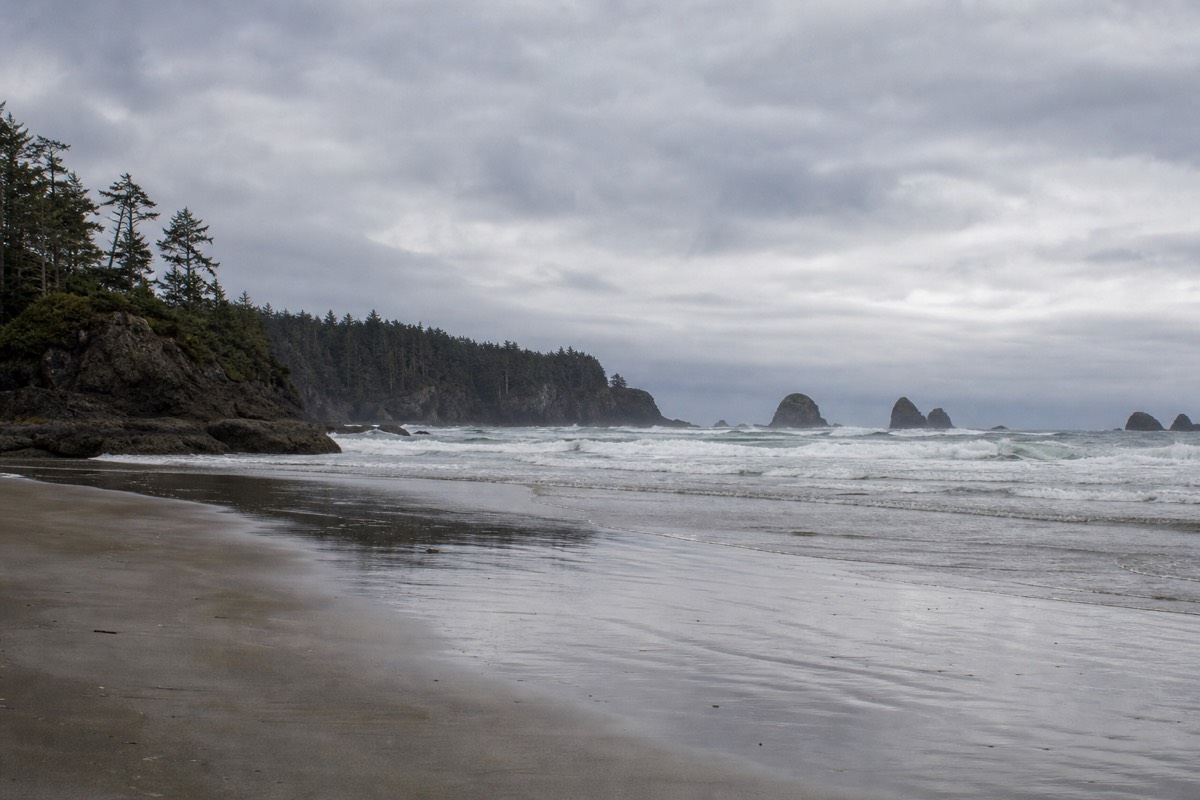
Rank a Vancouver Island beach and you immediately have to ask what for. The coast runs from warm, shallow sandflats where toddlers paddle at Parksville, to storm-hammered surf breaks at Tofino, to rock shelves near Port Renfrew that fill with anemones and sea stars when the tide drops. There is no single winner, only the right beach for the day you have in mind. This guide sorts the best of them by what you actually want out of a beach day, then tells you how to get there.
Best beach for what you want
Our team's picks by activity, drawn from the comparisons above; the best beach on any given day depends on the tide and the weather.
Which beaches top the list on Vancouver Island?
The island's best beaches fall into three zones: the wild surf coast around Tofino and Ucluelet, the rugged Juan de Fuca coast west of Victoria, and the warm family sands of the central east coast near Parksville. Long Beach, Chesterman, Cox Bay, Rathtrevor, Mystic and Botanical top most lists.

There is a best beach for surfing, another for small children, another for tidepools, and another again for a sunset among the driftwood. The west coast around Tofino takes the full force of the open Pacific, which is why its beaches surf so well and swim so coldly. The Juan de Fuca coast, a short drive west of Victoria, trades easy sand for drama: waterfalls dropping onto the beach, slot canyons and the island's finest tidepools. The sheltered east coast near Parksville is where the water actually warms up. Our guide to Pacific Rim National Park covers the Long Beach cluster in depth, so this page ranges wider across the whole island.
The reason for the variety is simple geography. The island's west coast faces thousands of kilometres of open ocean, so its beaches are wide, wave-battered and backed by rainforest. Turn to the sheltered eastern shore, tucked behind the island's own mountains and the Gulf Islands, and the water calms and warms. The southern tip, along the Juan de Fuca Strait, is a hybrid, exposed enough for surf and drama, yet close enough to Victoria for a day trip. Ucluelet, at the south end of the Pacific Rim coast, adds the Wild Pacific Trail, a clifftop path that is less a beach than a front-row seat to the surf, and a fine addition to any coastal itinerary.
| Beach | Region | Best for | Surf or swim | Access |
|---|---|---|---|---|
| Long Beach | Pacific Rim, west coast | Long walks, surf, big skies | Surf, cold water | Highway 4, park pass |
| Cox Bay | Tofino | Consistent surf, sunsets | Surf, cold water | Off Highway 4, parking |
| Chesterman Beach | Tofino | Families, learner surf | Surf and wade | Residential lanes, small lots |
| Rathtrevor Beach | Parksville, east coast | Young families, warm shallows | Swim, warmer | Provincial park, easy |
| Mystic Beach | Juan de Fuca, south | A wild hike to a waterfall | Wade | Two-kilometre forest trail |
| Botanical Beach | Port Renfrew, south | Tidepools at low tide | Rock pools | Trail from parking, tide-timed |
| China Beach | Juan de Fuca, south | Easy sandy escape | Wade | Short forest trail |
| Sombrio Beach | Juan de Fuca, south | Surf and a hidden waterfall | Surf, cold water | Trail from parking |
Which beaches are best for surfing?
For surfing, aim for the Tofino coast. Cox Bay has the most consistent, powerful waves and suits confident surfers; Chesterman Beach and the Long Beach breaks are gentler and friendlier to first-timers. On the south coast, Sombrio Beach is the local surf spot. You will want a wetsuit in this water year-round.
Cox Bay is the heavy hitter, a wide crescent that catches swell most days of the year and draws the island's better surfers, with a clifftop lookout trail worth the scramble for the view down the whole bay. Chesterman Beach, split into North and South by a rocky point, is calmer and the classic place to take a first lesson; at low tide a sandbar links the beach to Frank Island. The Long Beach breaks near Incinerator Rock are where most surf schools run their beginner sessions. Whichever you choose, the Pacific here stays cold all year, so read our guide to surfing in Tofino before you rent a board. To ride and roam in one morning, the bike and hike the wild coast of Tofino tour rolls beach cruisers along these surf beaches to a Pacific lookout.
Water temperature is the great equalizer here. Even in August the Pacific off Tofino rarely feels warm, and in winter it is genuinely cold, which is why a full wetsuit, and often boots, gloves and a hood in the colder months, is standard kit rather than an optional extra. The upside is that the surf runs year-round, and the biggest, cleanest swells often arrive in autumn and winter, exactly when the beaches empty out. Beginners are usually happiest from late spring through summer, when the waves are smaller, the water is a touch less punishing, and the days are long enough for an unhurried lesson.
Down south, Sombrio Beach is where Victoria surfers go when the swell is right. It is rockier and more exposed than the Tofino beaches and better suited to those with some experience, but the setting, with a hidden waterfall tucked in a mossy canyon just off the sand, is unlike anywhere else on the island. Access is a short trail from the parking area, so it stays quieter than the Tofino breaks even on a good day.
| Surf beach | Level | Character | Note |
|---|---|---|---|
| Cox Bay | Intermediate to advanced | Powerful, consistent | Lookout trail above the bay |
| Chesterman Beach | Beginner to intermediate | Mellow, split by a point | Sandbar to Frank Island at low tide |
| Long Beach at Incinerator Rock | Beginner | Forgiving whitewater | Surf schools cluster here |
| Sombrio Beach | Intermediate | Local south-coast break | Rocky, hidden waterfall nearby |
Which beaches are best for families?
For young families, Rathtrevor Beach near Parksville is the standout: the tide retreats close to a kilometre over warm sandflats, leaving shallow, sun-warmed pools ideal for small children. Chesterman Beach in Tofino and the wide flats of Long Beach also suit families, with more space than crowds even in high summer.
Rathtrevor is the rare beach on this coast where the water is genuinely swimmable for children. As the tide goes out across the vast sandflats it leaves behind shallow warm pools and firm sand for building and digging, and the surrounding provincial park has campsites, forest trails and washrooms. For a broader look at travelling here with little ones, see whether Vancouver Island is good with kids. Over on the west coast, Chesterman is the family choice: gentle, wide and close to town, with tidepools to poke around at low water and space to fly a kite when the surfers have the far end.
Beyond Rathtrevor, the central-east-coast towns of Parksville and Qualicum Beach are built for family beach days, with grassy foreshore parks, playgrounds, ice cream and shallow, gently shelving sand. The water here is among the warmest anywhere on the island, because the wide tidal flats sit under the sun for hours while the tide is out. If your trip leans toward small children and easy days rather than surf and long drives, basing on this coast pays off, and it still puts Cathedral Grove and the drive west within reach for the day you want a bigger adventure.
| You want | Top pick | Also good |
|---|---|---|
| Warm shallow swimming | Rathtrevor Beach | Chesterman Beach |
| Serious surf | Cox Bay | Sombrio Beach |
| Learner surf | Chesterman Beach | Long Beach at Incinerator Rock |
| Tidepools | Botanical Beach | Chesterman at low tide |
| A wild hike and waterfall | Mystic Beach | Sombrio Beach |
| Storm watching | Wickaninnish and Long Beach | Cox Bay |
| Sunset with driftwood | Cox Bay | Long Beach |
Which beaches are best for tidepools and wildlife?
For tidepools, nothing on the island beats Botanical Beach near Port Renfrew, where sandstone and basalt shelves fill with anemones, sea stars, urchins and small fish at low tide. Time your visit to a low tide of roughly a metre or less, and check the tide table before you drive out.
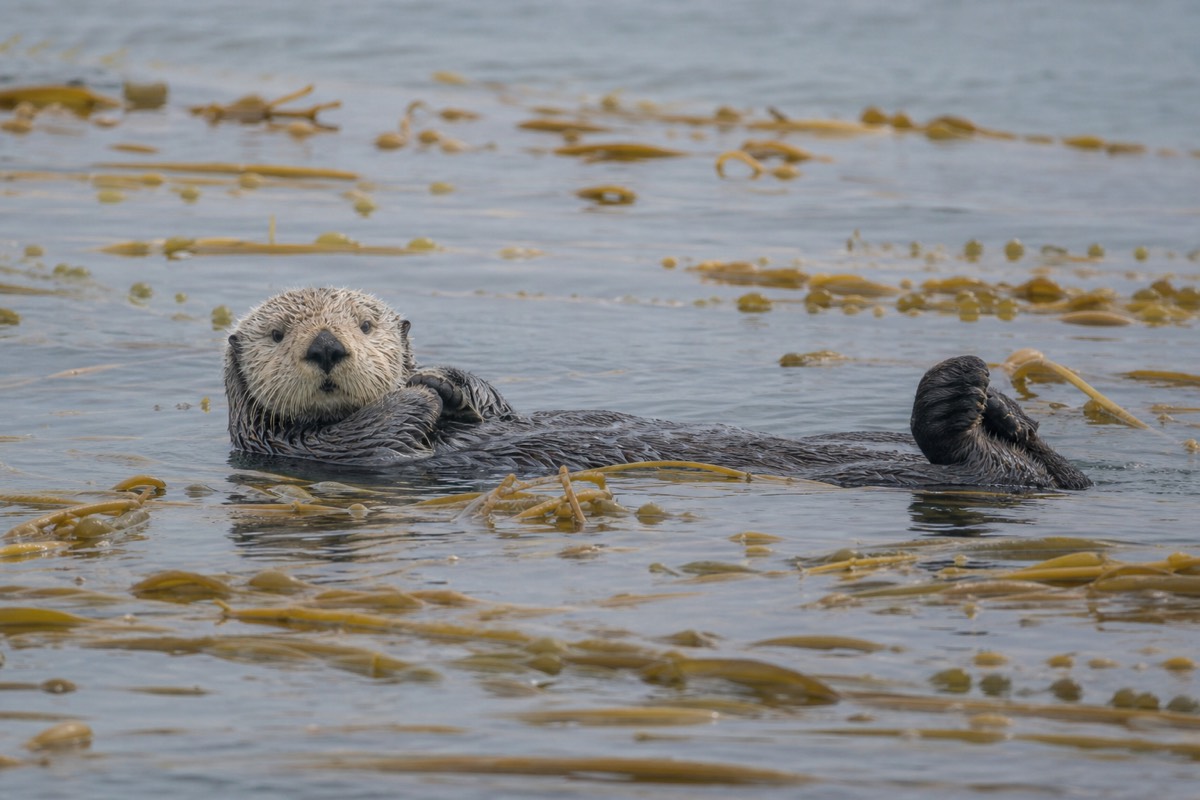
Botanical Beach only reveals itself at low tide. When the water pulls back off the rock shelves, the pools left behind hold a dense, living cross-section of the intertidal zone, which is why marine biologists have studied this shore for well over a century. Arrive around a low tide of about a metre or less, wear grippy shoes, and step carefully so you do not crush what you came to see. The wildlife is not limited to the pools: harbour seals haul out on offshore rocks, sea lions bark from the reefs, bald eagles work the tideline and, in season, grey and humpback whales pass offshore, which our guide to whale watching on Vancouver Island covers in full. A guided west coast seals, rainforest and waterfall tour from Victoria strings several of these south-coast beaches together with a stop among thousand-year-old cedars, and handles the tide timing for you.
Tidepooling rewards patience and a slow eye. Crouch beside a pool for a minute and what looked like bare rock resolves into movement: hermit crabs shifting their shells, sculpins darting for cover, gooseneck barnacles and purple and orange sea stars gripping the walls. The rule for keeping it that way is simple. Look, do not pry, put back anything you lift, and step on bare rock or sand rather than on the living carpet of mussels and barnacles. Low tides in late spring and summer often fall conveniently in daylight, which is the best window to plan a visit, so read the tide table and build your day around it.
| Beach | What you will see | Timing | Tip |
|---|---|---|---|
| Botanical Beach | Anemones, sea stars, urchins, fish | Low tide, about 1 m or less | Grippy shoes, tread lightly |
| Chesterman Beach | Crabs, small pools, sand dollars | Low tide | Explore the point at South Chesterman |
| Long Beach | Shorebirds, driftwood life | Any tide | Watch offshore for whales in season |
| Juan de Fuca coast | Seals, sea lions, eagles | Year-round | Bring binoculars |
Which beaches are best for a wild hike and a waterfall?
The island's most rewarding beach hikes are on the Juan de Fuca coast. Mystic Beach is reached by a forest trail of about two kilometres and ends at a sandy cove with a waterfall dropping straight onto the beach. Sombrio hides a waterfall in a mossy slot canyon just off the sand, and China Beach is the easy one.
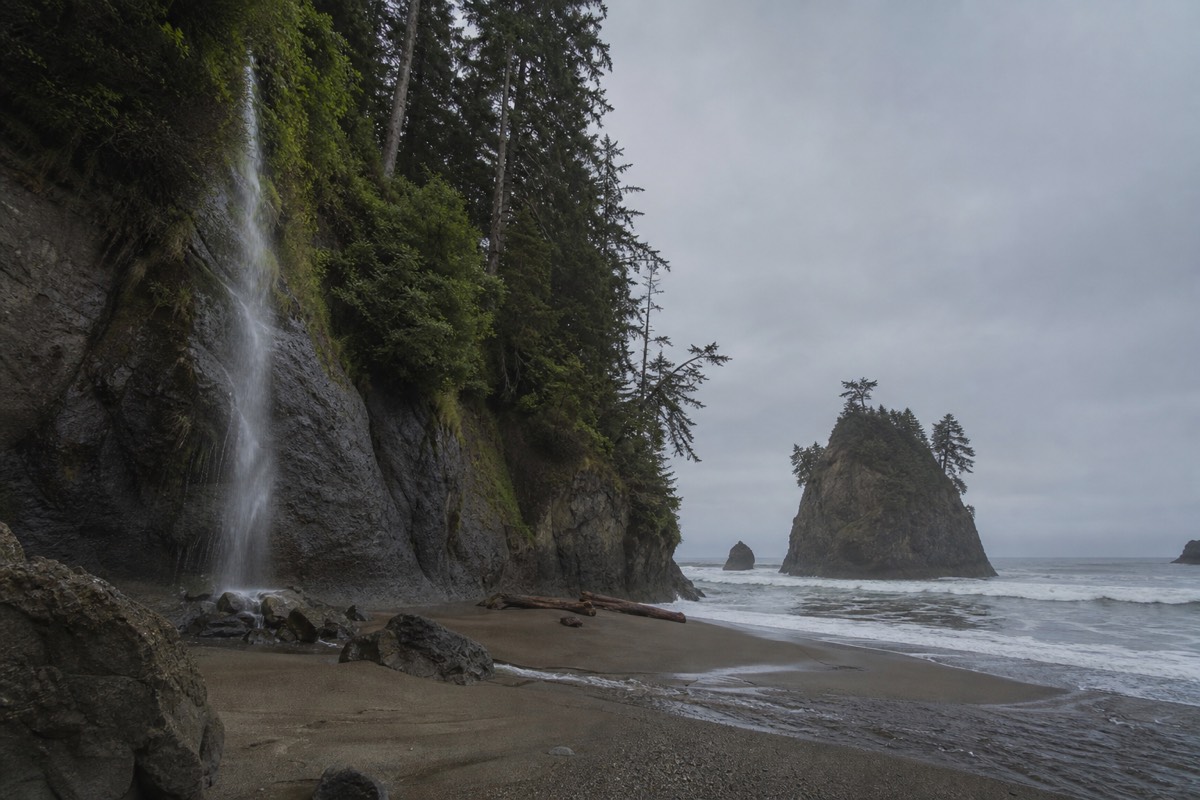
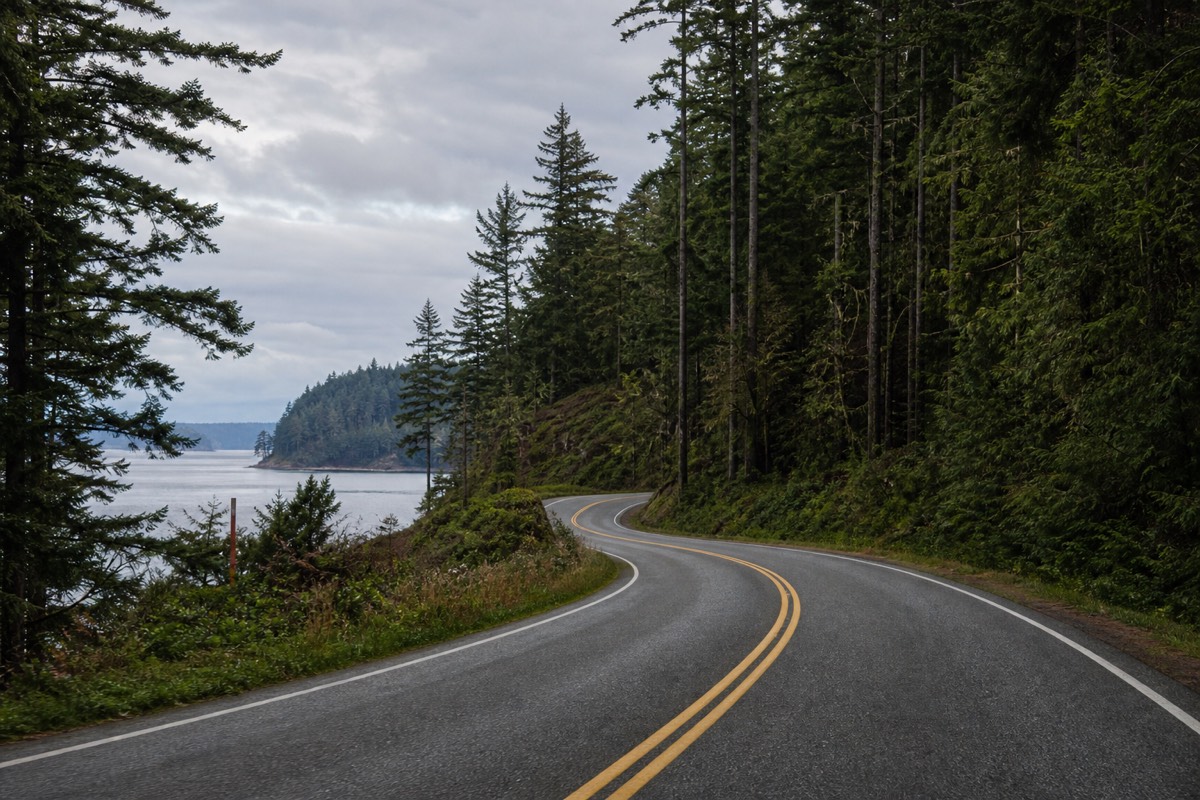
Mystic Beach is the payoff at the end of a short but properly forested walk on the Juan de Fuca Marine Trail, with a suspension bridge on the way in and a waterfall spilling over the bluff onto the sand at the far end. China Beach, a little to the east, is the easy option: a ten-minute walk through big trees to a broad sandy beach with its own waterfall at the west end. Sombrio rewards the curious; from the main beach, a short scramble up a creek leads into a narrow, fern-hung slot canyon with a hidden fall at the back. These coves pair naturally with a Vancouver Island road trip, and if chasing falls is the whole point of your trip, our guide to Vancouver Island waterfalls maps the biggest ones inland.
These south-coast beaches are the coastal access points for the Juan de Fuca Marine Trail, a rugged 47-kilometre route that runs from China Beach to Botanical Beach. You do not need to hike the whole thing to enjoy the best of it; each trailhead reaches a beach in under an hour, and you can string several together in a day by car. Wear proper footwear, because the forest sections are rooty and often muddy, and check the tide before you drop onto any beach, since a rising tide can pin you against the headlands. The payoff, a waterfall falling onto empty sand, is worth the effort of the walk in.
A word on the tide once more, because it matters most on these hike-in beaches. The trails deliver you onto sand that a rising sea can shrink quickly, and some of the prettiest spots sit at the base of headlands you do not want to be trapped against. Start your walk on a falling or low tide, note when the water turns, and give yourself a clear margin to get back out. Do that, and these coves are among the most memorable few hours the island offers.
Which beaches are best at sunset and for storm watching?
For sunsets, the west coast wins: Cox Bay and Long Beach face straight into the setting sun over open ocean, with driftwood to lean on and space for a small fire below the high-tide line where it is permitted. The same beaches become storm-watching theatres from November to February.
As the sun drops, Cox Bay turns gold and the surfers become silhouettes; bring layers, because the temperature falls fast once the light goes. In winter the mood flips entirely. From November to February the North Pacific sends swell after swell into this coast, and watching a winter storm from a safe distance, or from behind glass in a warm lodge, is a genuine reason to visit in the off-season. Our guide to Tofino storm watching explains when to come and where to stand.
The west-facing beaches also make the island's best stargazing once the summer crowds thin, since there is little light pollution beyond the towns. On a clear autumn night with the surf as a soundtrack, the sky over Long Beach is a genuine event. Time your beach day to end with the sunset rather than start with it, pack a thermos and a warm layer, and stay a while after the light drops. That last half-hour, when the day-trippers have gone and the colour deepens over the water, is when the coast feels most like itself.
When should you go, and what about the tides?
July and August bring the warmest, driest beach weather, but also the crowds; May, June and September are quieter with decent conditions. Whatever the month, the tide dictates the day on this coast. Check a tide table before you go: tidepools need a low tide, and surf and safety change completely as the water rises.
On the sheltered east coast at Rathtrevor, high summer is the sweet spot, when the sandflats bake and the shallow water warms enough for real swimming. On the exposed west and south coasts, the beach is worth walking in any weather, and a bright day is never guaranteed even in August, so rain gear and layers belong in your bag year-round. The single most important habit is reading the tide. Botanical Beach and the tidepool shelves are only accessible near low water, Mystic and Chesterman shift character as the tide moves, and rising water can cut off sections of beach against the cliffs. Never turn your back on the sea when the surf is up. For seasonal planning and current conditions, the official resources at Vancouver Island's tourism site are a useful starting point.
Parking is the other practical constraint, especially in Tofino. The lots at Cox Bay, Chesterman and the popular Long Beach access points fill early on sunny summer days, and the residential lanes around Chesterman have limited, tightly enforced parking. Arrive before mid-morning or after mid-afternoon, or come outside July and August, and the same beaches feel far less pressured. On the south coast, the Juan de Fuca trailhead lots are smaller still, one more reason an early start or a guided day pays off.
| Region | Beaches | Character | Base town |
|---|---|---|---|
| West coast (Pacific Rim) | Long Beach, Cox Bay, Chesterman | Surf, old-growth, big skies | Tofino, Ucluelet |
| Juan de Fuca (south) | Mystic, China, Sombrio, Botanical | Waterfalls, tidepools, wild trails | Sooke, Port Renfrew |
| Central east coast | Rathtrevor | Warm shallow family sand | Parksville |
| Bring | Why |
|---|---|
| Layers and a waterproof shell | Coast weather changes fast in any season |
| Grippy footwear or water shoes | Wet rock at tidepools and headlands |
| A tide table for the day | Tidepools and safe access depend on it |
| A wetsuit for the water | The Pacific stays cold year-round |
| Binoculars | Whales, seals and eagles offshore |
| Sun and wind protection | Exposed beaches with little shade |
How do you reach the beaches, and should you join a tour?
Most island beaches are reachable by car, but they are spread across long distances: Tofino is over four hours from Victoria, and the Juan de Fuca beaches are one to two hours west of the city. A guided day tour handles the driving, the tide timing and the wildlife spotting on the harder-to-reach south coast.
Renting a car gives you the freedom to chase low tide and good light, which is how the island's beaches reward you most. Fuel up, download offline maps because cell coverage thins on the coast, and give yourself more time than the map suggests, since the roads are winding. Long Beach sits inside the national park reserve, where a Parks Canada pass is required to stop. The south-coast tidepool and waterfall beaches around Sooke and Port Renfrew are the ones most worth handing to a guide, because the tide windows are tight and the sites are strung out along the highway.
Distances on the island are deceptive, and the beaches are not clustered. From Victoria, the Juan de Fuca beaches around Sooke and Port Renfrew are a manageable day out, an hour to two hours west; the Tofino beaches are a different commitment, over four hours away and best paired with an overnight. Rathtrevor and the central-coast family beaches sit conveniently between the two, a couple of hours up-island from Victoria. Plan your beach days around where you are based rather than trying to see all three coasts in one trip. To build a fuller west-coast itinerary around your beach time, browse things to do in Tofino and Ucluelet, and see the full set of guided nature day tours in one place.
| Beach area | From Victoria | From Tofino | Access |
|---|---|---|---|
| Juan de Fuca (Mystic, China, Sombrio, Botanical) | 1 to 2 hrs west | Over 5 hrs | Trailheads off Highway 14 |
| Rathtrevor and central coast | About 2 hrs north | About 2 to 2.5 hrs | Easy, right off the highway |
| Tofino beaches (Long Beach, Cox, Chesterman) | 4 to 4.5 hrs | In town or minutes away | Off Highway 4, park pass for Long Beach |