Surfing in Tofino: Beaches, Lessons, Seasons & Wetsuits
Tofino is Canada's surf town, a cold-water beach break wrapped in rainforest where complete beginners and hardened winter chargers share the same sand. Here is how to pick your beach, your lesson and your wetsuit.
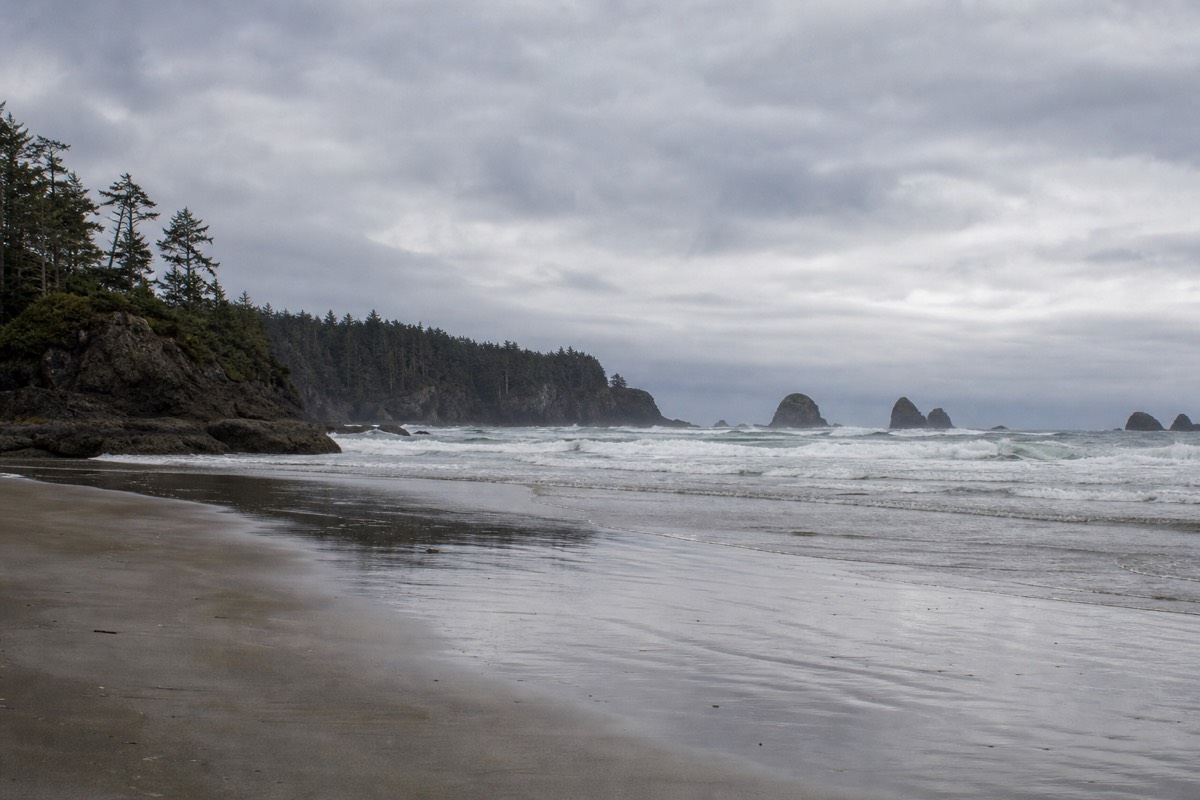
People picture surfing as a warm-water sport, all boardshorts and palm trees. Tofino throws that out. The waves here roll in off the open North Pacific onto long sand beaches backed by old-growth forest, the water is cold enough to need rubber year-round, and the surf runs through every month of the calendar. It is one of the most beginner-friendly places in the country to stand up for the first time, and also a genuine winter destination for surfers who chase heavy swell. This guide, put together by our team from what the operators we work with see on the beach every week, covers where to go, whether to book a lesson, and exactly how to stay warm.
What surprises most first-timers is how welcoming the scene is. Tofino has been a surf town for decades, so the schools, the rental shops and the beaches are all set up for people learning, not just for experts. You do not need to bring anything, know anything, or be especially fit to have a good first day. What you do need is realistic expectations about the cold and the effort, and a willingness to fall off a lot while you figure it out, which is true of learning to surf anywhere.
Tofino surf, season by season
Wave energy and typical wetsuit needs across the year. Water temperatures are approximate planning ranges, not guarantees.
Is Tofino actually good for surfing?
Yes. Tofino has consistent, year-round surf on forgiving sand-bottom beach breaks, a cluster of experienced surf schools, and enough beaches to spread crowds and skill levels apart. Summer waves are mellow and ideal for learning, while winter delivers the powerful swell that draws serious surfers. The one non-negotiable is a wetsuit, because the water is cold.
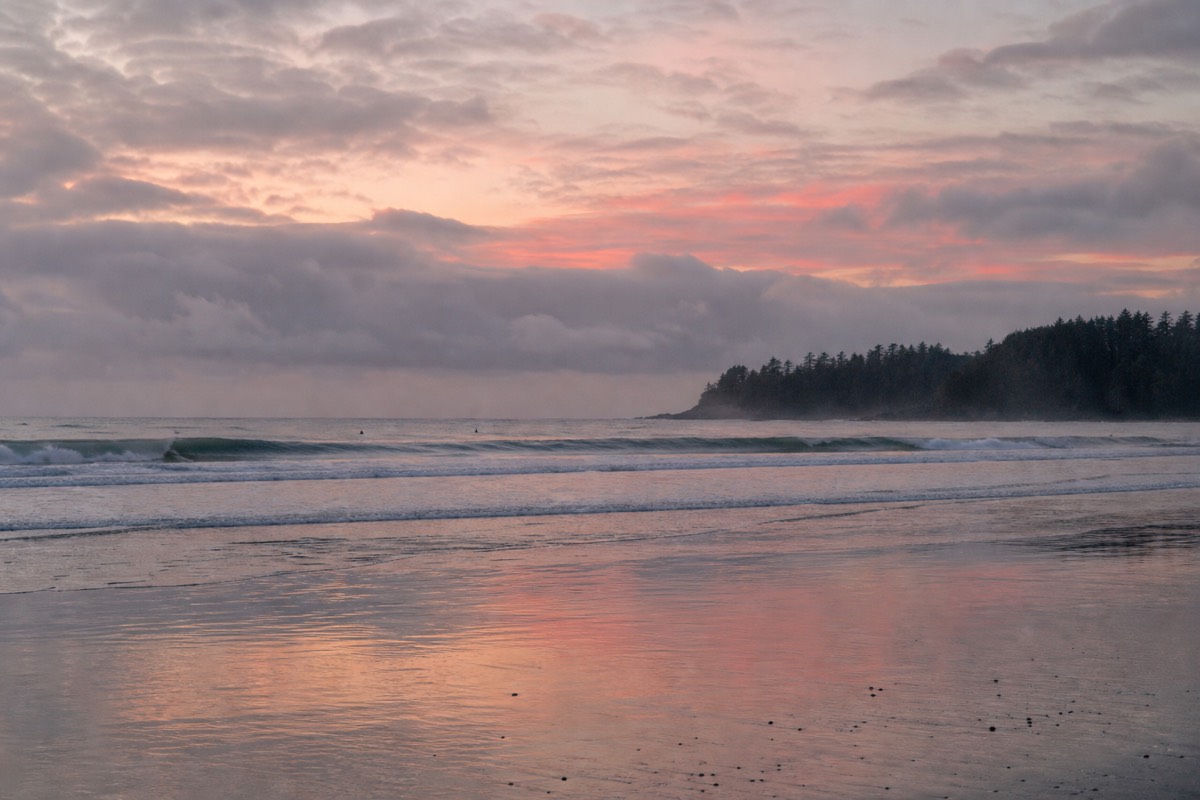
What makes it work for beginners is the setup: gently shelving sand instead of reef, waves that reform close to shore, and instructors who know which bank is breaking on any given tide. Long Beach and Cox Bay catch swell reliably, so there is almost always something to ride. The exposure to the open Pacific means the coast rarely goes completely flat, which is part of why it has earned its reputation as the surf capital of Canada. If you are still shaping the wider trip, our roundup of things to do in Tofino and Ucluelet shows how a surf day slots in beside wildlife cruises and rainforest walks.
Which Tofino beaches are best for surfing?
Cox Bay, Long Beach and Chesterman Beach are the three surf beaches that matter. Cox Bay holds the most swell and the strongest waves, Long Beach is the biggest and the classic first-timer choice, and Chesterman is gentler and best for families and softer days. Where you go depends on your level and the size of the swell.
Cox Bay is the powerhouse, a deep bay that pulls in and stacks up swell, which makes it the go-to when everywhere else is small and a place to respect when it is big. Long Beach, inside Pacific Rim National Park, is where most lessons happen because there is simply room for everyone, and its multiple peaks spread surfers out so it rarely feels crowded even on a busy day. Chesterman, split into North and South by the Frank Island tombolo, tends to be the mellowest of the three and a favourite with families. For how these compare to the calmer sand elsewhere, see our guide to the best beaches on Vancouver Island, and remember the Long Beach lots need a park pass. A useful habit is to check the swell and tide before you drive out, then pick the beach to match, since the same day can be tiny at one break and workable at another.
| Beach | Best for | Wave character | Good to know |
|---|---|---|---|
| Cox Bay | Intermediate to advanced, bigger days | Powerful, holds the most swell | Strong rips when it is up, watch the corners |
| Long Beach | Beginners and lessons | Long, workable, plenty of peaks | Inside the park, day pass required to park |
| Chesterman Beach | Families, softer sessions | Gentler, more forgiving | North and South split by Frank Island |
| MacKenzie Beach | Small-day learning | Sheltered, small | Calm and close to town |
Should you take a lesson or rent a board?
If you have never surfed, book a lesson. A two to two-and-a-half hour group lesson includes the wetsuit, a soft beginner board, and an instructor who puts you where the waves are working, which is worth far more than the price on your first day. If you already surf, board and wetsuit rental in town is quick and cheap by comparison.
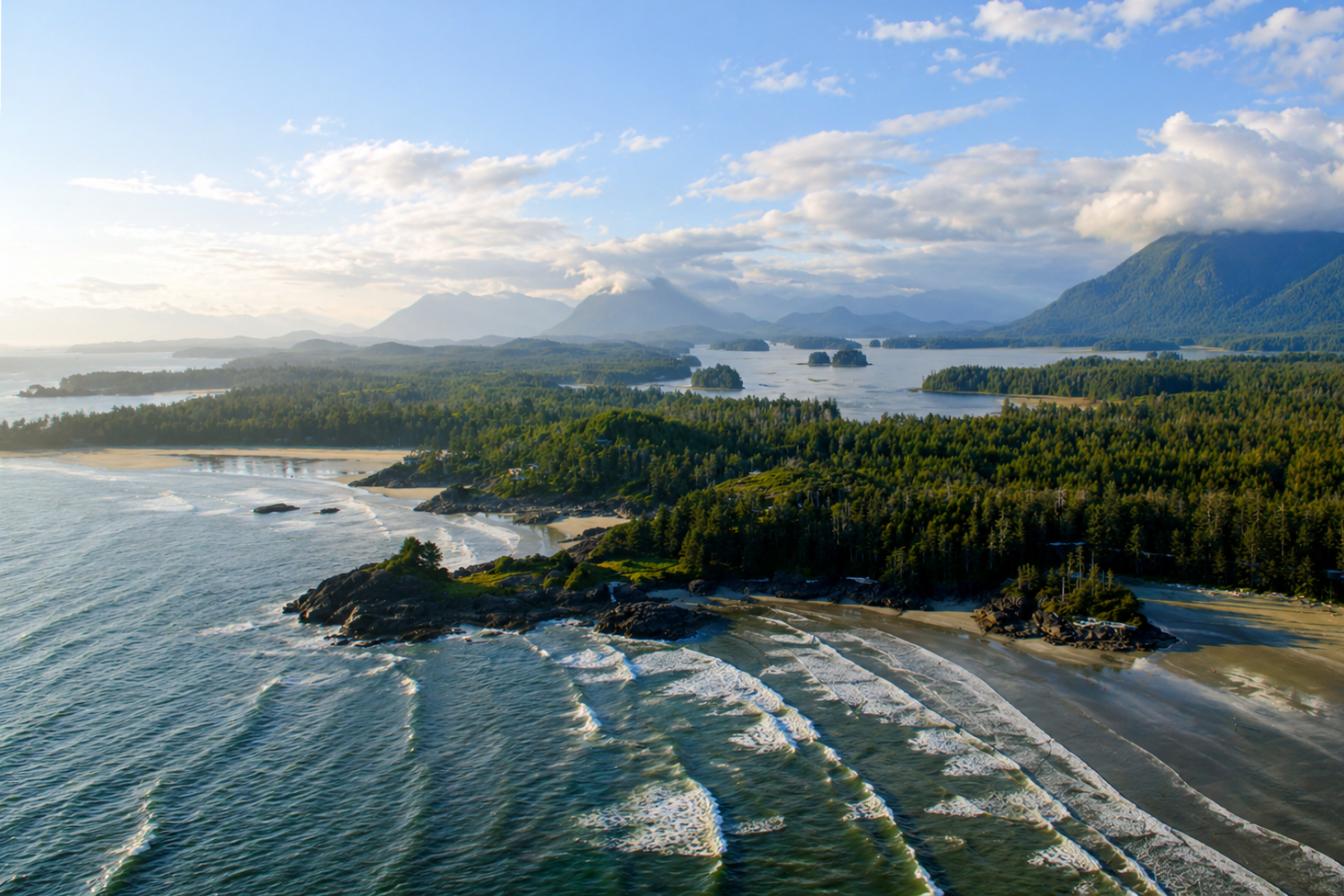
Tofino has a well-established surf school scene, and rather than name specific operators we will say what to look for: small group ratios, gear included, and a beach choice matched to the day's conditions. A first lesson gets most reasonably fit people standing up on the whitewater by the end, and a good instructor will also teach you how to read the beach, spot a rip, and paddle efficiently, which are the skills that actually let you keep improving. Rental suits those who can already read a beach and pick their own peak. Board rental typically runs by the half-day or full day, and most shops rent wetsuits, boots and gloves separately if you bring your own board. If you are travelling with others of mixed ability, a private or semi-private lesson lets the instructor pitch the session to your group rather than a mixed crowd.
| Option | What is included | Who it suits | Rough budget |
|---|---|---|---|
| Group lesson | Wetsuit, soft board, instructor, roughly 2 to 2.5 hours | First-timers and near-beginners | Around $90 to $120 per person |
| Private or semi-private lesson | Same gear, far more individual coaching | Fast progress, nervous starters, kids | Higher per person, varies |
| Board rental | Board only, wetsuit usually extra | Surfers who can pick their own waves | Around $25 to $45 per day |
| Full gear rental | Board plus wetsuit, boots and gloves | Travelling surfers without kit | Around $50 to $70 per day |
When is surf season in Tofino?
Tofino surfs all year, but the two ends of the calendar feel completely different. Summer, from June through August, brings the smallest, cleanest and warmest conditions, which is why it is the learning season. Winter, from November through February, brings the largest and most powerful swell for experienced surfers. Spring and fall sit in between.
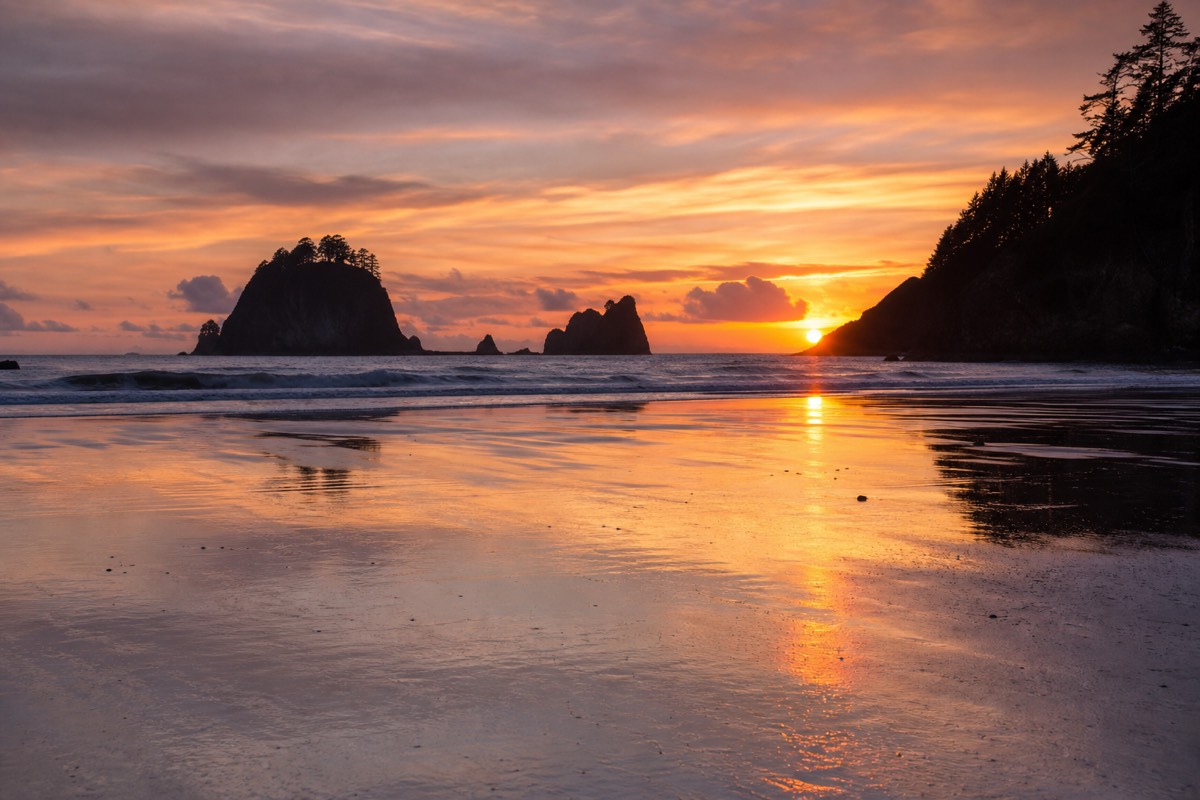
For a first-timer, aim for summer. The waves are gentler, the water is at its least cold, and the days are long, so you can surf in the evening after a day on the trails. Experienced surfers often prefer the raw power and empty lineups of winter, when the same storms that drive the swell also make Tofino a destination for storm watching through the winter. Fall is a quiet sweet spot with decent size and thinner crowds once the summer visitors leave, and many locals name September and October as their favourite months to surf. If you are timing the wider trip, our take on how many days you need on Vancouver Island helps you fit a surf window into the rest of the itinerary.
| Season | Wave size | Water | Who it suits |
|---|---|---|---|
| Summer, Jun to Aug | Smallest, cleanest | Least cold, low double digits Celsius | Beginners, families, learners |
| Fall, Sep to Oct | Building, consistent | Cooling | Improvers wanting fewer crowds |
| Winter, Nov to Feb | Largest, most powerful | Coldest, near single digits | Experienced surfers, swell chasers |
| Spring, Mar to May | Easing but still lively | Cold, slowly warming | Intermediates, quieter lineups |
Do you need a wetsuit in Tofino, and how thick?
Yes, a wetsuit is essential in Tofino every single month. The Pacific here stays cold all year, sitting in the low double digits Celsius in summer and dropping toward single digits in winter. Plan on a 4/3 mm wetsuit for summer and a 5/4 mm suit plus boots, gloves and a hood for winter. Lessons include the right suit.
This is the detail visitors most often underestimate. You can surf comfortably here in any season with the correct rubber, and you will be cold and cut the session short without it. Summer surfers get away with a 4/3 and often add boots for longer sessions; by winter the full kit of a thick suit, boots, gloves and hood is standard, and even then most people surf in shorter bursts than they would in warm water. Swimming without a wetsuit is only really pleasant on the warmest summer afternoons, and even then briefly. A well-fitting suit matters as much as the thickness, since a loose suit flushes cold water through and undoes the point of it. If you are renting, ask the shop to fit you properly rather than grabbing the first suit off the rack. Treat the table below as a planning allowance, not a rule, since personal cold tolerance varies a lot.
| Season | Wetsuit thickness | Extras |
|---|---|---|
| Summer | 4/3 mm full suit | Boots optional for long sessions |
| Fall | 4/3 mm, some go to 5/4 | Boots, light gloves |
| Winter | 5/4 mm full suit | Boots, gloves and hood, all needed |
| Spring | 5/4 mm easing to 4/3 | Boots, gloves early on |
Is it safe to surf in Tofino?
Tofino is a safe place to learn as long as you respect the cold, the rip currents and your own level. Book a lesson if you are new, surf near others, and stay on the beginner beaches on big days. Rip currents are the real hazard, not sharks, which are extremely rarely encountered here and are not a practical concern for surfers.
The cold is the first thing to manage, and the right wetsuit handles it. Rip currents are the next, and the simplest rule is to surf where the surf schools operate and to ask a local or an instructor which corners to avoid on a given tide. Cox Bay in particular develops strong rips when the swell is up, and the safe move if you are ever caught in one is to stay calm, keep hold of your board, and paddle across the current rather than against it. As for sharks, encounters with surfers on this coast are so rare that the schools do not treat them as a genuine risk, and the cold water is not typical habitat for the species people worry about. Common sense, a lesson, and the correct beach for the day cover almost every safety concern, and drift logs on the beach at high tide deserve a mention too, since they can move in the surf.
| Stage | Where to surf | What to expect |
|---|---|---|
| First time | Long Beach or MacKenzie on a small day | Whitewater standing with an instructor |
| Improver | Long Beach or Chesterman | Catching unbroken waves, turning |
| Confident | Cox Bay on the right size | Bigger, more powerful faces and rips |
What is surf etiquette in Tofino?
Surf etiquette keeps a crowded lineup safe and friendly. The core rules are simple: do not drop in on someone already riding a wave, wait your turn, do not ditch your board, and give beginners and locals room. On Tofino's busy summer days, good manners in the water matter as much as skill.
The most important rule is right of way. The surfer closest to the breaking part of the wave has priority, and paddling for a wave someone is already on, known as dropping in, is the quickest way to cause a collision and annoy everyone around you. Beyond that, hold onto your board rather than letting it go when a wave comes, because a loose board is dangerous to the people behind you. Paddle out around the break rather than through the pack, apologise if you get in someone's way, and do not paddle straight to the peak and sit on the best spot the moment you arrive. As a beginner you will spend most of your time in the whitewater closer to shore, well away from the more experienced surfers on the unbroken waves, which keeps everyone safer. A friendly attitude goes a long way in a small surf town, and the local scene is generally welcoming to people who show they are trying to do the right thing.
How do you progress from your first wave?
Most people stand up in the whitewater on their first lesson, then progress over several sessions to catching unbroken waves, turning, and eventually reading the ocean well enough to surf without an instructor. Surfing has a steep early curve and a long, rewarding plateau, so patience and repeat sessions matter more than natural talent.
The typical path looks like this. A first lesson gets you popping up on the broken, foamy waves near shore. A few more sessions build the paddling fitness and timing to catch those waves consistently and ride them straight. From there the big step is turning to catch the green, unbroken face of the wave, which takes real practice and a decent amount of falling off. Learning to read the ocean, spotting where and when waves will break, and positioning yourself in the right place, is the slowest and most valuable skill, and it only comes with time in the water. Booking two or three lessons rather than one accelerates all of this, and many visitors surf every morning of a short trip precisely because progress compounds when sessions are close together. Do not measure yourself against the experienced surfers out the back; everyone started in the whitewater, and the fun is in the improving.
Where can kids and families surf?
Chesterman Beach and MacKenzie Beach are the friendliest for families, with gentler, more forgiving waves close to town. Many surf schools run family and kids lessons with small ratios, child-sized wetsuits and soft boards. Children who are confident swimmers and happy in cold water often take to it faster than their parents.
Surfing is a great family activity here as long as you match the beach and the day to the group. The mellower beaches keep things manageable, and a lesson means a qualified instructor is watching the kids in the water rather than you trying to teach and supervise at once. Cold tolerance is the main limit for younger children, so keep sessions shorter, get them into warm dry clothes quickly afterward, and pack plenty of snacks. For a family surf trip, summer is the clear pick, when the water is at its least cold and the waves at their mellowest. If some of the group would rather stay dry, the beach itself keeps everyone happy while the surfers are out, and there is plenty else on the coast to fill a family day, from tide pools to easy forest boardwalks.
How much does surfing in Tofino cost?
A first surf in Tofino is affordable. A group lesson with all gear runs roughly $90 to $120, board rental sits around $25 to $45 a day, and full board-and-wetsuit rental around $50 to $70. Add a park pass for the Long Beach lots and a night or two in town, and a proper surf trip is very doable on a modest budget.
The single biggest cost of a Tofino surf trip is usually accommodation in peak summer, not the surfing itself. Booking early for July and August makes a real difference, and Ucluelet often runs a little cheaper if you are watching the budget, as we cover in our comparison of Tofino or Ucluelet. If you plan to surf several days, buying or bringing your own wetsuit can work out cheaper than repeated rentals, though most short-trip visitors are better off renting. The figures below are planning allowances; check current rates locally, as they shift with season and demand.
| Item | Rough range |
|---|---|
| Group surf lesson with gear | Around $90 to $120 per person |
| Board rental, per day | Around $25 to $45 |
| Full board and wetsuit rental, per day | Around $50 to $70 |
| Pacific Rim park day pass | Modest per-person daily fee, check current rates |
What should you pack for a surf day?
Beyond the board and wetsuit, pack a warm change of clothes, a towel or two, a hooded top for after, water and snacks, and something to warm your hands. West coast weather swings fast, so a waterproof jacket earns its place even on a sunny morning. If you rent or take a lesson, the gear itself is handled for you.
The post-surf chill is real, especially in cooler months, so dry warm layers waiting in the car matter more than they sound. Sunscreen still counts on grey days because reflection off the water is strong, and reef-safe options are kinder to the coast you are enjoying. A wide-mouth bottle of warm water is a local trick for thawing cold hands and feet after a winter session, and a changing robe or oversized towel saves an awkward roadside change. For everything else the region asks you to carry, the packing notes in our Pacific Rim National Park guide cover the wider trip, from trail shoes to bug spray in the forest.
| Item | Why |
|---|---|
| Warm dry change of clothes | The post-surf chill is fast on this coast |
| Two towels | One for you, one for gear and the car seat |
| Waterproof jacket | Weather turns quickly, even on clear mornings |
| Water and snacks | Sessions burn energy, and beaches have no shops |
| Warm water in a bottle | Thaws cold hands and feet after winter surfs |
What else should you pair with a surf trip?
A surf trip pairs naturally with the rest of the west coast. Give your arms a rest with a rainforest walk, a wildlife cruise, or a guided ride along the same surf beaches you are learning on. Two or three days lets you surf every morning and still see the coast.
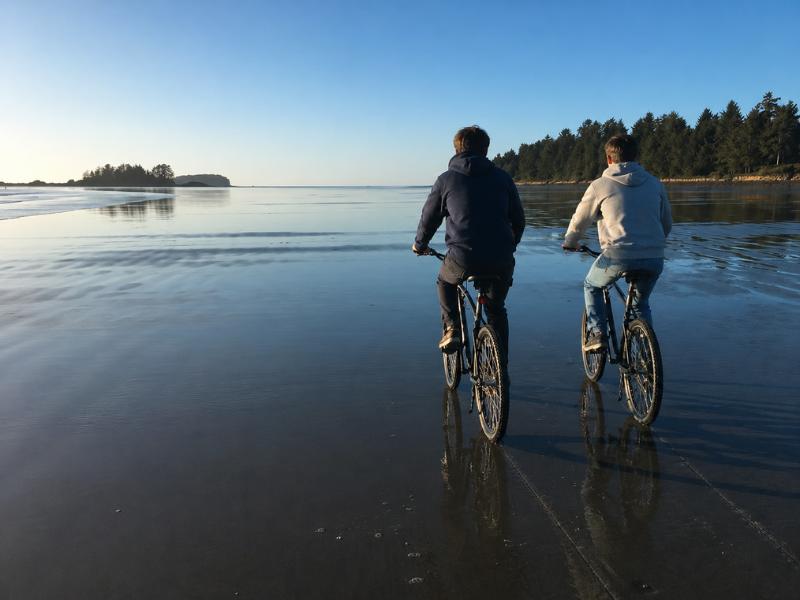
One of the easiest add-ons is a guided bike and hike along the surf beaches, which rolls beach cruisers past the same breaks and finishes at the Pettinger Point lookout, taking about three hours from roughly $110, so check the live listing for dates. Between sessions, the calm forest walks and beach time make for a balanced few days, and a wildlife cruise or a soak at Hot Springs Cove gives sore shoulders a rest while still keeping you on the water. If you would rather have the coast's activities booked for you, the team behind our guided west coast adventures arranges the surf-adjacent days end to end. For regional planning, the island visitor resource and Parks Canada information for Pacific Rim are worth a look before you drive out.