Vancouver Island Hot Springs: Where to Soak Beyond Hot Springs Cove
Vancouver Island keeps its geothermal cards close. There is really one wild hot spring worth crossing water for, and it is spectacular. Here is how to reach Hot Springs Cove, and the honest picture of everywhere else you can soak.
Vancouver Island has one wild geothermal standout. This guide explains the remote Tofino journey and the honest built-soaking alternatives.
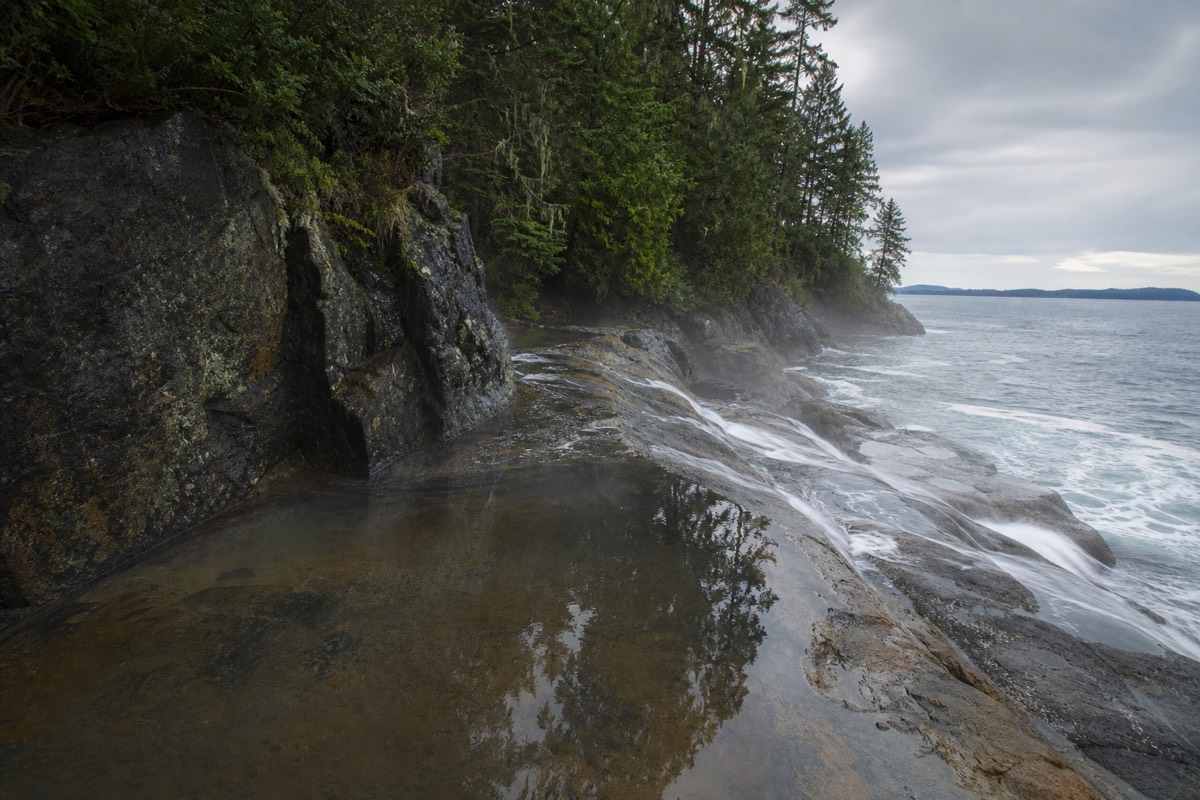
Picture lowering yourself into a rock pool of steaming geothermal water while cold Pacific surf breaks a few metres below, close enough that the biggest sets send spray up onto your shoulders. That is Hot Springs Cove, and it is the reason people search for hot springs on Vancouver Island in the first place. What surprises most travellers is what the search turns up next, which is almost nothing else in the wild.
Our team fields this question often, so here is the honest version up front. Vancouver Island is not a hot-springs destination in the way parts of the BC mainland are. It has one genuine natural hot spring you would travel for, reached only by boat or floatplane, plus a growing set of built spa experiences that scratch a similar itch. This guide covers all of it, starting with the one that matters most and being straight about the rest. If you are mapping the wider coast, our roundup of things to do in Tofino and Ucluelet puts a soak in context alongside surf, wildlife and rainforest.
Getting to Hot Springs Cove from Tofino
A typical Hot Springs Cove day by boat from Tofino. Times are approximate and depend on the operator, sea conditions and wildlife stops.
Does Vancouver Island actually have hot springs?
Vancouver Island has one true natural hot spring worth the trip: Hot Springs Cove, north of Tofino in Clayoquot Sound, reachable only by boat or floatplane. Beyond it, the island has very few developed public hot springs. Most other soaking here means Nordic-style spas, resort mineral pools and wood-fired tubs, which are man-made rather than geothermal.
This trips people up because the BC mainland has a string of well-known hot springs, so travellers assume the island matches it. It does not. The island's geology simply does not produce the same accessible geothermal sites, and the one standout sits in a remote marine park with no road to it. That scarcity is part of what makes Hot Springs Cove feel special rather than a letdown, because reaching it is an expedition rather than a car park and a changing room. The table below sets out the realistic soaking options on the island so you can plan with clear eyes.
It helps to reset expectations rather than chase a long list that does not exist. Vancouver Island rewards travellers who treat its one wild hot spring as a destination in itself, and who fill the rest of a trip with the beaches, rainforest and wildlife the coast does so well. Thinking of it that way turns the scarcity from a disappointment into a reason the place stays special and uncrowded.
| Soak type | What it is | Where |
|---|---|---|
| Hot Springs Cove | Natural geothermal pools at the ocean's edge | Clayoquot Sound, north of Tofino, boat or floatplane only |
| Nordic-style spa | Built hot, warm and cold pools, sauna, quiet circuits | A handful of west-coast and mid-island retreats |
| Resort mineral or hot pools | Heated pools and hot tubs at lodges and resorts | Tofino, Ucluelet and elsewhere on the island |
| Wood-fired hot tubs | Private soaking tubs at cabins and wilderness lodges | Scattered across the coast, often booked with a stay |
| Ocean and lake swimming | Cold-water dips, not hot, but the coast's real soak for many | Beaches and lakes island-wide |
Where is Hot Springs Cove, and how do you get there?
Hot Springs Cove sits in Maquinna Marine Provincial Park, roughly 37 kilometres northwest of Tofino in Clayoquot Sound. There is no road. You reach it by boat, which takes around one to one and a half hours each way, or by floatplane in about 20 minutes. Almost everyone arrives on a guided cruise from Tofino harbour that builds in wildlife watching along the way.
The no-road part is the whole point, and it is worth saying plainly, since people do search for a way to drive there. You cannot, which we spell out fully in our piece on whether you can drive to Hot Springs Cove. The standard visit is a boat tour that leaves the harbour and threads through the sheltered inlets of Clayoquot Sound, past shorelines rich with seals, sea lions, eagles and, in the right months, whales. A floatplane cuts the travel time dramatically and adds an aerial view of the Sound, at a higher cost. Some travellers combine the two, flying one way and cruising the other, to get both experiences in a single day.
Whichever way you travel, the journey is genuinely part of the appeal rather than a chore to get through. The boat route threads sheltered inlets and passes shorelines and small islands that most visitors never otherwise see, and the guides narrate the ecology and history of the Sound as you go. Because there is no road, the cove stays quiet and hard to reach, which is exactly why the pools do not feel like a tourist attraction even at their busiest.
| How to reach it | Rough time each way | Notes |
|---|---|---|
| Guided boat cruise from Tofino | About 1 to 1.5 hours | The usual choice, with wildlife watching built in |
| Floatplane from Tofino | About 20 minutes | Fastest, adds aerial views, higher cost |
| Fly one way, cruise the other | Varies | A popular combination for the best of both |
| Private boat or kayak | Half a day or more | For experienced boaters only, the open water is serious |
What is the soak actually like at Hot Springs Cove?
After the boat docks, you walk about two kilometres along a cedar boardwalk through old-growth rainforest to reach the springs. The water surfaces hot at the top and cascades down a series of rock pools toward the sea, cooling as it goes. You pick a pool at the temperature you want, with the incoming tide and surf setting the mood.
The approach is half the experience. The boardwalk winds through towering cedars, and generations of boat crews have carved their vessel names into the planks, which turns the walk into a slow read of local seafaring history. The pools themselves step down a rock cleft: the uppermost is the hottest, fed straight from the source, and each pool below mixes in a little more cool ocean water. At high tide the waves push right up into the lower pools, so the temperature swings with the sets, which is exactly the sensation people come for. The whole outing runs about six hours door to door on a standard cruise, most of it travel and rainforest with a good stretch of soaking in the middle. To understand the forest you walk through, our guide to the island's old-growth cedar and Douglas fir is worth a read beforehand.
Timing with the tide changes the experience more than anything. At higher tides the surf pushes right into the lower pools, so you can sit where scalding fresh water meets a cold Pacific surge, which is the sensation people travel for. At lower tides the pools are calmer and easier for nervous swimmers or children. A good guide knows the day's tide and will point you to the pool that suits you, so ask when you arrive rather than heading straight for the top.
| Part of the visit | What to expect |
|---|---|
| The boardwalk | About 2 km each way through old-growth rainforest, some stairs |
| The upper pools | Hottest, straight from the source, room for a few people |
| The lower pools | Cooler, mixed with ocean water, waves reach them at high tide |
| Time at the springs | Usually around 60 to 90 minutes on a standard tour |
| Total day | Roughly 6 hours round trip from Tofino by boat |
How does it compare to mainland BC hot springs?
Mainland British Columbia has many more hot springs, from large resort complexes to backcountry pools, and most are reachable by road. Vancouver Island has one, reached only by water. The trade is convenience for wildness: the mainland is easier and more developed, while Hot Springs Cove offers a remote, ocean-edge soak that no drive-up pool can match.
If soaking is the sole point of your trip and you want easy access, the mainland is the better fit, with well-known destinations a straightforward drive from Vancouver. The island rewards a different traveller, one who wants the journey to be part of it. Getting to the island at all is its own step, covered in our guide to getting to Vancouver Island by ferry and seaplane, and Hot Springs Cove then sits a further boat ride beyond Tofino. Frame it as a wilderness day out rather than a spa visit and it delivers something the mainland pools cannot.
| Hot Springs Cove | Mainland BC hot springs | |
|---|---|---|
| Access | Boat or floatplane only | Mostly drive-up |
| Setting | Remote ocean-edge rock pools | Ranges from resort pools to backcountry |
| Development | Wild and undeveloped | Often built up with facilities |
| Number of sites | Essentially one | Many |
| Best for | A wilderness day with wildlife and rainforest | Easy, frequent soaking |
What other ways can you warm up and soak on Vancouver Island?
Beyond Hot Springs Cove, soaking on Vancouver Island means built experiences rather than natural springs. A small number of Nordic-style spas run hot, warm and cold pools with saunas, many resorts and lodges have heated mineral pools and hot tubs, and wilderness cabins often come with private wood-fired tubs. All are man-made, and all can be genuinely lovely.
The Nordic-style spa circuit, alternating a hot pool, a cold plunge and a rest, has grown on the coast and pairs well with a rainy west-coast day. Resort pools are the easy default if you just want a warm dip after a cold beach, and they are widely available around Tofino and Ucluelet. Wood-fired tubs at cabins and lodges are the most romantic option and usually come as part of a stay rather than a standalone visit. None of these are hot springs in the geological sense, and we would rather be clear about that than let the word do work it should not. A soak like this is a fine reward after a rainy walk or a storm-watching day in winter, when warming up is the whole agenda.
The Nordic circuit is the closest thing to a spa ritual on the island, and it suits a rainy afternoon perfectly: you move between a hot pool, a brief cold plunge and a warm rest, repeating the loop until you feel thoroughly reset. Resort and lodge pools are the pragmatic choice when you just want to warm up after a cold beach without booking anything, and a private wood-fired tub at a cabin is the most memorable of the lot, especially with rain on the roof and the forest close by. None of these replace the drama of the wild cove, but on a grey day they earn their place.
| Option | What you get | Booking |
|---|---|---|
| Nordic-style spa | Hot, warm and cold pools, sauna, quiet circuits | Book a session ahead, popular on rainy days |
| Resort or lodge pools | Heated pools and hot tubs, easy access | Often included with a stay or a day pass |
| Wood-fired cabin tub | Private soaking, forest or ocean views | Usually part of a cabin or lodge booking |
| Spa treatments | Massage and wellness alongside soaking | Reserve well ahead in peak season |
What should you bring, and when should you go?
Bring a swimsuit worn under your clothes, water shoes or sandals with grip, a quick-dry towel, and warm layers for the boat and boardwalk. Hot Springs Cove is open year-round, but summer brings the calmest seas and warmest walk, while winter is dramatic and quiet with rougher crossings. May, June and September hit the sweet spot.
The rock around the pools is slick and the boardwalk can be wet, so footwear with grip matters more than anything else you pack. Change into your suit before you reach the pools, since facilities are minimal, and keep a dry warm layer for the boat ride back, which feels colder once you are damp. Season is really about the crossing: summer seas are gentlest and best for anyone prone to seasickness, and the same wildlife-rich inlets are lively then too. Winter visits are possible and beautiful, but weather cancels boats more often, so build in a flexible day. For the wider picture of when to come, our overview of the best month to visit Vancouver Island lines the seasons up.
One more planning note: build in flexibility around the crossing. Operators cancel for weather rather than risk the open water, and that happens more often outside summer, so if a soak at the cove is high on your list, give it more than one possible day. On a calm day the trip runs like clockwork, but the sea, not the schedule, has the final say, and a spare day removes the disappointment of a single weather cancellation ending the plan.
| Item | Why |
|---|---|
| Swimsuit worn underneath | Minimal changing facilities at the springs |
| Water shoes or grippy sandals | The rocks and boardwalk are slick |
| Quick-dry towel | Space and time are limited |
| Warm dry layer for the boat | The return ride is cold once you are damp |
| Waterproof jacket | West-coast weather turns fast |
| Water and a snack | It is a long day with little on offer at the cove |
What are the rules and etiquette at Hot Springs Cove?
Hot Springs Cove is a natural, undeveloped site in a protected marine park, so the etiquette is simple: keep the pools clean, share the space, and leave no trace. Use no soap, shampoo or products in the water, since it flows into the sea, pack out everything you bring, and keep noise down so the wilderness setting stays intact for everyone.
Because there are no attendants managing the pools, the experience depends on visitors looking after it. The site sits within the traditional territory of local First Nations, and the whole area is a marine protected zone, which is worth carrying in mind as you enjoy it. Practical courtesies go a long way: take turns in the small upper pools rather than settling in for an hour when others are waiting, watch your footing on the slick rock, and give any wildlife on the boardwalk a wide berth. Treated with respect, the cove stays the special place that made the long trip worthwhile.
Can you combine the springs with wildlife watching?
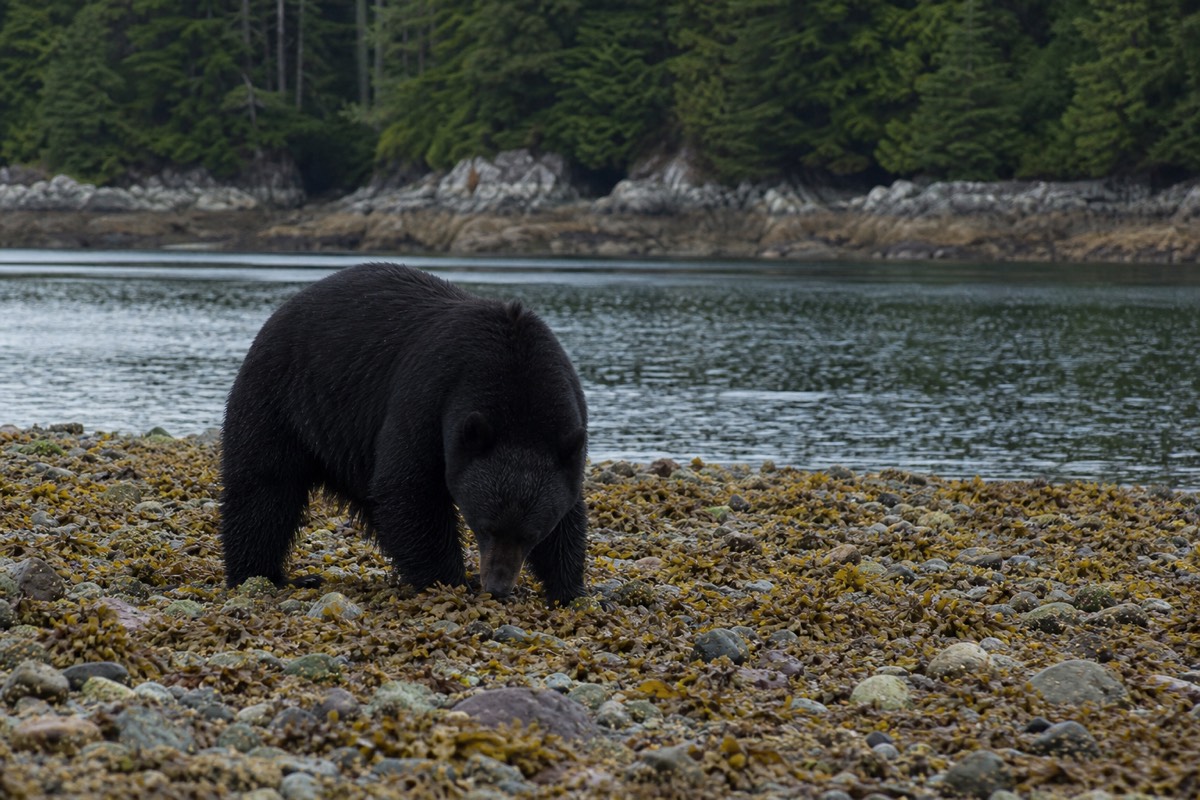
Yes, and most visitors do without planning it. The boat cruise to Hot Springs Cove doubles as a wildlife trip, passing shorelines where seals, sea lions, otters, eagles and herons are common, with whales and dolphins possible in the right months. The soak and the wildlife come as one package on a standard tour.
This is part of why the boat route is worth the extra time over flying. The sheltered inlets of Clayoquot Sound are rich with life, and a good skipper slows down when there is something to see, so the crossing rarely feels like dead time. If wildlife is a real priority, treat the springs cruise as your scenic day and add a dedicated wildlife outing on another morning, since a focused cruise spends more time actively searching. Spring through fall is the strongest window for the widest range of animals, while winter narrows the odds but adds drama to the crossing.
Photographers in particular love the boat leg, since the light on the water and the layered islands of the Sound change by the minute. Even on a grey day the moody atmosphere suits the coast, and calm water makes for the steadiest shots. Bring a strap or a waterproof pouch for your camera or phone, keep it secured on the open sections, and you will come back with images of the crossing that rival the pools themselves.
Is Hot Springs Cove worth the trip and the cost?
For most travellers, yes. The combination of a wildlife cruise, an old-growth boardwalk and a soak in ocean-edge geothermal pools is a genuinely rare day out, and the remoteness is the point rather than a drawback. It is less worth it if you get badly seasick, are on a very tight budget, or simply want an easy drive-up soak.
The honest way to judge it is by what you value. If the journey, the setting and the wildness matter to you, few days on the island compete, and people routinely name it a highlight of a whole trip. If you mainly want warm water with minimal effort, a resort pool or a Nordic-style spa closer to town delivers that for far less time and money. Anyone prone to motion sickness should pick a calm-weather day and consider medication, since the open stretches can be lumpy. Weigh the six-hour commitment against the rest of your itinerary, and if the days are tight, it may be the thing to save for a return visit.
How do you plan a Hot Springs Cove day into a trip?
Treat Hot Springs Cove as a full day out of Tofino and book the boat ahead, especially in summer, since the covered cruisers carry limited passengers. Pair it with a separate wildlife or beach day rather than cramming two big outings together, and leave a spare day in shoulder season in case weather moves the crossing.
The simplest way in is the Hot Springs Cove wildlife cruise from Tofino, a six-hour trip from around $228 that combines the crossing, the wildlife watching and the soak, so check the live listing for departure times. On a separate morning, a small-group bear-watching cruise into Clayoquot Sound at about $140 keeps you on the water without repeating the same route, and a shorter guided bike-and-hike along the surf beaches from roughly $108 balances a boat day with time on land. After a long day out, a hot dinner in town is the natural finish, and our guide to where to eat in Tofino covers the seafood worth booking. If you would rather have the whole coast arranged for you, the team behind our guided west coast trips books the boats and stays end to end. Sheltered paddling is a gentler water day too, as our guide to Gulf Islands kayaking lays out. For park and safety details, the island visitor resource and the background on Vancouver Island's geography are useful before you go.