The Best Hikes on Vancouver Island, Easy to Epic
Vancouver Island packs an astonishing range of trails into one long coastline: ten-minute walks under thousand-year-old cedars, clifftop loops above crashing surf, and multi-day coastal treks that rank among Canada's finest. Here is how to pick the right one for your fitness and your dates.
Prefer a guided trail? A private Victoria rainforest hike adds transport, route choice and a local guide. Explore guided rainforest hike details
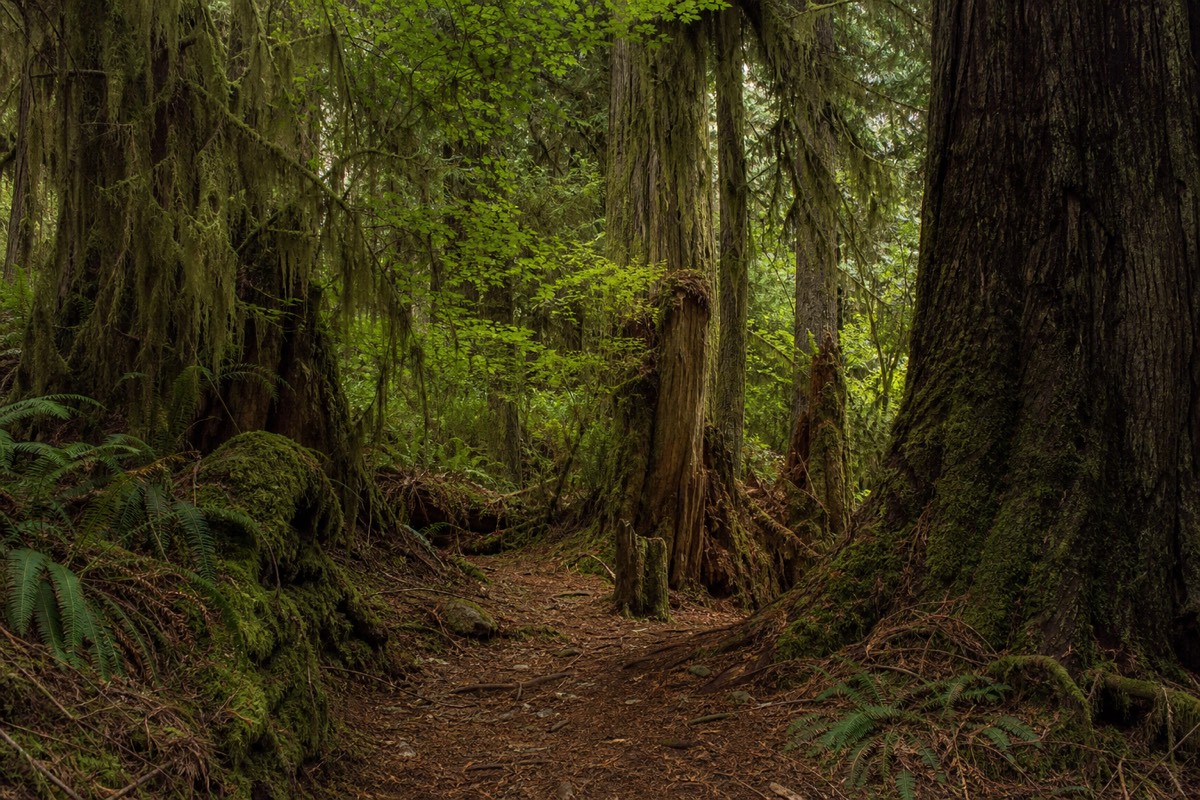
You can stand under a Douglas fir older than the printing press and be back at your car in twenty minutes. You can also disappear into the bush for a week on a coast that wrecked ships for a century. That range is what makes hiking here different from almost anywhere else in Canada, and it means the honest answer to "what is the best hike on Vancouver Island" depends entirely on who is asking. This guide sorts the standout trails by difficulty, from easy family boardwalks to epic multi-day routes, so you can match a walk to your legs, your dates and your appetite.
Vancouver Island hikes, from easy to epic
Planning allowances by difficulty level; actual times vary with fitness, weather and tides, so treat them as a guide, not a promise.
What are the best hikes on Vancouver Island?
The best hikes on Vancouver Island span every level. For easy walks, Cathedral Grove's old-growth loop and the Wild Pacific Trail's Lighthouse Loop are unmatched. For moderate day hikes, Mystic Beach, the Elk Falls suspension bridge and Botanical Beach stand out. For epic multi-day treks, the West Coast Trail and the Juan de Fuca Marine Trail are the classics. The right choice depends on your fitness, your time and the season.
There is no single best trail, only the best trail for your trip, which is why sorting by difficulty beats ranking one to ten. A family with young children wants a flat boardwalk under giant trees. A fit day-hiker wants a suspension bridge or a beach with a waterfall. A seasoned backpacker wants ladders and tides and a week off the grid. All three are here, often within an hour of each other.
Location matters as much as difficulty. The south island around Victoria has the Juan de Fuca coast and Goldstream. The centre has Cathedral Grove and Elk Falls. The west coast around Tofino and Ucluelet has the national park trails and the clifftop loops. Plan around where you are basing yourself, and use our roundups of things to do in Tofino and Ucluelet and things to do in Victoria to build the walks into fuller days. To decide how long to give the whole island, see our guide to how many days you need.
| Level | Standout hikes | Time needed |
|---|---|---|
| Easy | Cathedral Grove, Wild Pacific Lighthouse Loop, Goldstream | 20 min to 1 hr |
| Moderate | Mystic Beach, Elk Falls bridge, Botanical Beach | Half a day |
| Hard | Wild Pacific Artist Loops linked, longer coastal sections | A full day |
| Epic | West Coast Trail, Juan de Fuca Marine Trail | Multi-day |
What are the best easy hikes and walks?
The best easy walks are the old-growth loop at Cathedral Grove, the Rainforest and Shorepine Bog boardwalks in Pacific Rim National Park, the Lighthouse Loop of the Wild Pacific Trail in Ucluelet, and the riverside paths at Goldstream Provincial Park near Victoria. All are short, mostly flat, and deliver huge scenery for very little effort.
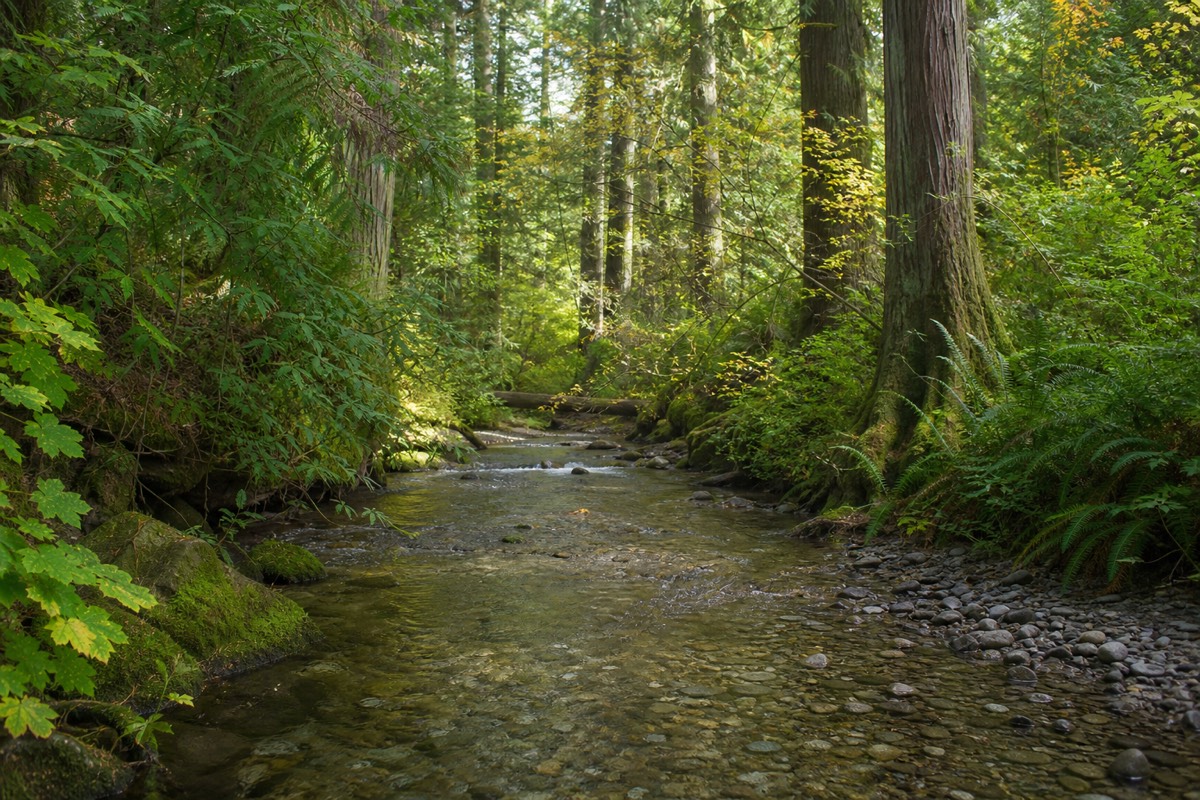
Cathedral Grove, in MacMillan Provincial Park on the drive to Tofino, is the one nobody should skip. A short, mostly level loop takes you among Douglas firs and western red cedars, some between 300 and 800 years old, and the scale simply does not read in photographs. Allow more time than the distance suggests, because you will keep stopping to look up. Our guide to the old-growth forests of Vancouver Island covers this grove and the bigger trees near Port Renfrew in detail, and you can read whether Cathedral Grove is worth visiting for the honest verdict.
On the west coast, the boardwalk loops of the Pacific Rim National Park Rainforest Trail and Shorepine Bog give you old-growth and a strange dwarf bog forest on raised cedar walkways, ideal in any weather. The Lighthouse Loop of the Wild Pacific Trail in Ucluelet is an easy clifftop circuit past the Amphitrite Point Lighthouse. Nearer Victoria, Goldstream Provincial Park offers gentle riverside trails that come alive during the autumn salmon run, covered in our guide to Goldstream Park and the salmon run. For details and conditions on the provincial parks, BC Parks is the official source.
Families travelling with young children have more options than they expect. Most of these easy walks are pushchair-friendly on their flat, hard-surfaced sections, and the flat sand at Rathtrevor Beach near Parksville makes for a gentle shoreline stroll that doubles as a place for kids to run off energy at low tide. The key with children is to keep the distances short, build in snack stops, and treat the walk as the destination rather than a route to somewhere else. On the busier boardwalks, keep little ones close to the middle of the path, since the raised edges over wet forest or bog have no railings.
| Hike | Where | Distance (allow) | Highlight |
|---|---|---|---|
| Cathedral Grove loop | MacMillan Park, Highway 4 | Short loop, 20 to 30 min | Ancient Douglas firs |
| Rainforest Trail | Pacific Rim National Park | About 1 km each loop | Old-growth boardwalk |
| Shorepine Bog | Pacific Rim National Park | Under 1 km loop | Dwarf bog forest |
| Lighthouse Loop | Wild Pacific Trail, Ucluelet | About 2.5 km | Clifftop and lighthouse |
| Goldstream riverside | Goldstream Park, near Victoria | Short, mostly flat | Salmon run in autumn |
What are the best moderate day hikes?
The best moderate hikes are the day sections of the Juan de Fuca Marine Trail, above all the walk to Mystic Beach and its suspension bridge, the Elk Falls suspension bridge trail near Campbell River, the tide-pool shelves at Botanical Beach near Port Renfrew, and the clifftop Artist Loops of the Wild Pacific Trail. Each takes a few hours and rewards a bit of effort with a real payoff.
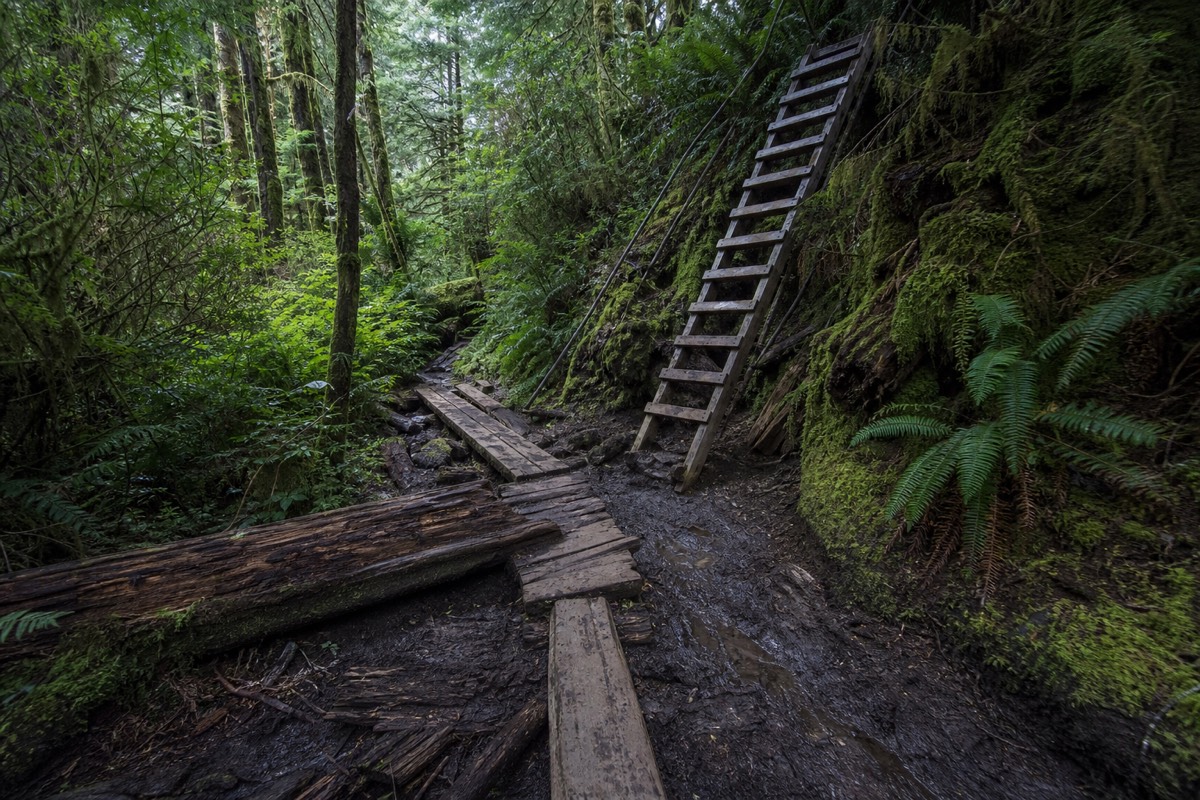
The Juan de Fuca coast is the south island's day-hiking heartland. The walk from the China Beach trailhead to Mystic Beach crosses a suspension bridge and ends at a beach with a waterfall dropping onto the sand, one of the most rewarding half-days near Victoria. Further along the same coast, China Beach and Sombrio Beach pair short walks with big sand and a surf-culture cove, and at the southern end the tidal shelves of Botanical Beach hold some of the best tide pools in British Columbia, best explored around low tide.
In the centre of the island, the Elk Falls suspension bridge near Campbell River is a short but memorable walk to a footbridge strung across a gorge with a thundering waterfall below. On the west coast, linking the Artist Loops of the Wild Pacific Trail turns an easy walk into a longer clifftop outing above crashing surf. If you would rather explore Tofino's beaches by bike and on foot with a local reading the coast for you, a guided bike and hike along the surf beaches pairs an easy ride with a walk to a Pacific lookout.
These moderate hikes share a common lesson: on this coast, the tide is part of the plan. Botanical Beach is a good example, because its tide pools only reveal their full life when the water drops, and arriving at high tide means seeing a fraction of what makes it famous. The same applies to the beach sections of the Juan de Fuca coast, where a rising tide can cut off a stretch of sand and force a scramble. Check a tide table before you set out, aim for the low-tide window at any shelf or pool destination, and give yourself a margin so a fast-rising sea never dictates your pace. Footwear with real grip matters here too, since wet rock and slick roots cause most of the minor accidents on these walks.
| Hike | Where | Time (allow) | Highlight |
|---|---|---|---|
| Mystic Beach | Juan de Fuca, near Jordan River | 2 to 3 hrs return | Suspension bridge, beach waterfall |
| Elk Falls suspension bridge | Near Campbell River | 1 to 2 hrs | Gorge footbridge and waterfall |
| Botanical Beach | Port Renfrew | Half a day at low tide | Tide pools on rock shelves |
| Sombrio Beach | Juan de Fuca coast | 1 to 2 hrs | Hidden waterfall, surf cove |
| Wild Pacific Artist Loops | Ucluelet | 1 to 2 hrs | Clifftop surf views |
What are the best hard and multi-day hikes?
For serious hikers, the two great multi-day routes are the West Coast Trail, a roughly 75-kilometre backcountry expedition of six to eight days with ladders, cable cars and a required permit, and the Juan de Fuca Marine Trail, a roughly 47-kilometre coastal route usually walked in three to four days. Both trace the wild southern coast and demand fitness, tide-planning and proper gear.
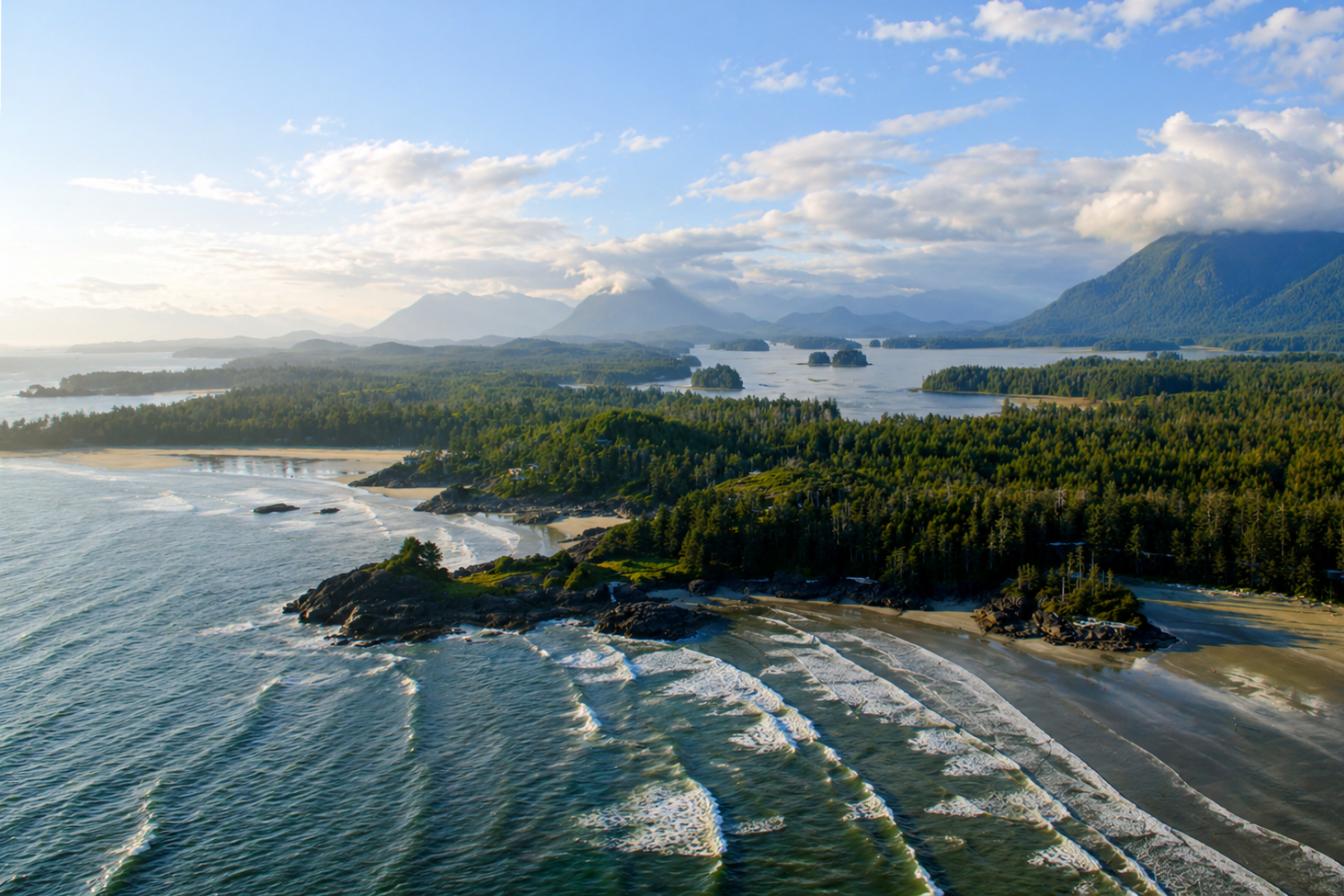
The West Coast Trail is the island's bucket-list trek and one of the finest coastal backpacks anywhere. It runs between Pachena Bay near Bamfield and Gordon River near Port Renfrew, along the shore mariners called the Graveyard of the Pacific, and it throws ladders, log crossings, hand-operated cable cars, tidal shelf walking and deep mud at everyone who attempts it. It is capped, permitted and seasonal, so you must reserve a start date months ahead. Our full guide to the West Coast Trail and Juan de Fuca Marine Trail covers permits, sections and how to choose between them, and the official reservation and conditions live on the Parks Canada Pacific Rim pages.
The Juan de Fuca Marine Trail is the more flexible sibling, walkable end to end or in day sections thanks to four trailheads, and it needs no advance permit for day use. Beyond these two, the island's interior holds tougher alpine hiking in Strathcona Provincial Park, the island's largest and oldest park, where routes climb into genuine mountain terrain for experienced, well-equipped hikers. Alpine conditions change fast and snow lingers late, so check BC Parks for current reports before heading up. These are not walks to improvise; evacuation is slow and expensive, and the coast and mountains both punish the unprepared.
Honest self-assessment is the safety gear that matters most on these routes. The multi-day trails demand that you have carried a heavy pack for consecutive days, can read a tide table, and know how to look after yourself when the weather turns and stays turned. If any of that is unfamiliar, build up to it on shorter overnights first rather than making the West Coast Trail your first backpack. There is no shame in choosing the day sections of the Juan de Fuca instead, which deliver much of the same coastline for a fraction of the commitment, and every experienced islander will tell you that a trek you enjoy beats a trek you merely survive.
| Trek | Length (allow) | Duration | Notes |
|---|---|---|---|
| West Coast Trail | About 75 km | 6 to 8 days | Permit required, ladders, tides |
| Juan de Fuca Marine Trail | About 47 km | 3 to 4 days | No permit for day use, muddy |
| Strathcona alpine routes | Varies | Day to multi-day | Real mountain terrain, check conditions |
What are the best hikes for old-growth forest and big trees?
For giant trees, the standouts are Cathedral Grove in MacMillan Provincial Park, the Rainforest Trail in Pacific Rim National Park, and Avatar Grove near Port Renfrew, home to gnarled ancient cedars and the famous single Douglas fir known as Big Lonely Doug nearby. All let you walk among trees that were standing centuries before Europeans reached this coast.
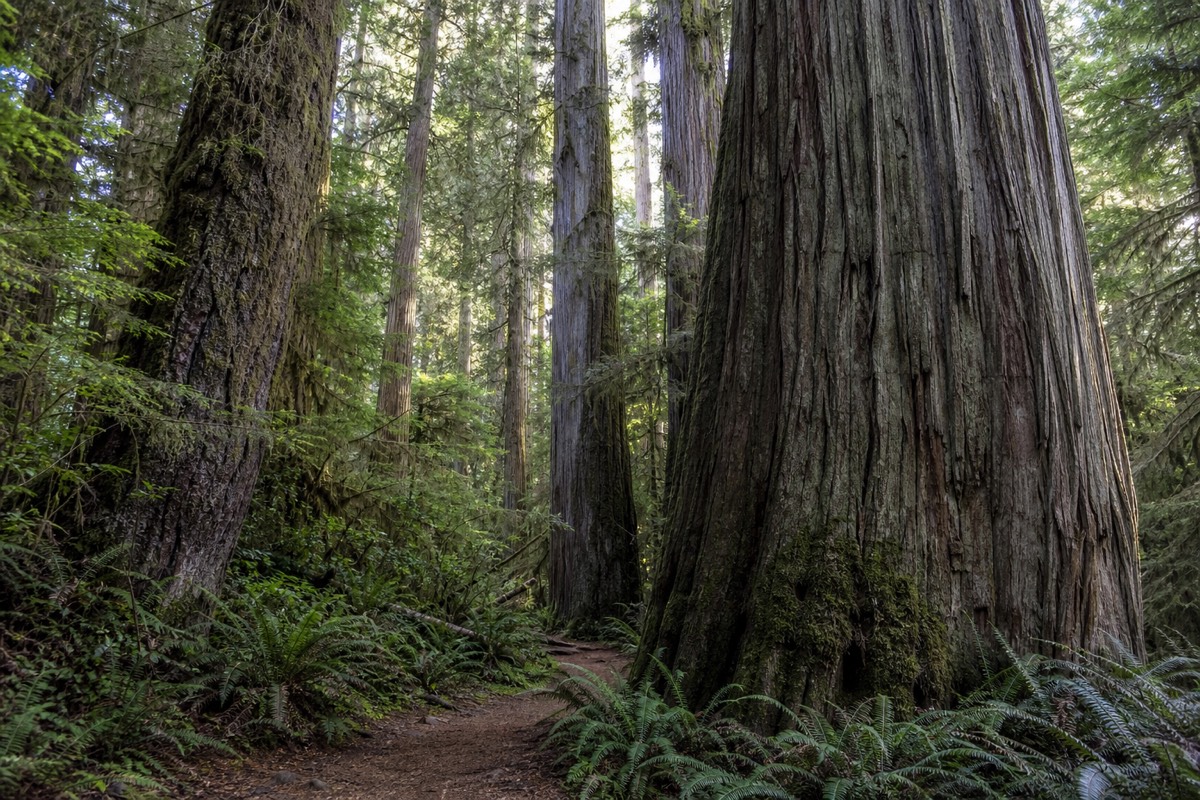
Old-growth is the island's signature, and you do not need to be fit to experience it. Cathedral Grove's flat loop puts you under Douglas firs up to 800 years old within minutes of the highway. The Rainforest Trail's raised boardwalks do the same on the west coast, keeping you above the saturated forest floor while cedar and hemlock tower overhead. Both are covered in our guide to the old-growth forests of Vancouver Island.
Near Port Renfrew, on the south island, Avatar Grove has become a pilgrimage for tree-lovers, its boardwalks winding past cedars twisted into extraordinary shapes, and Big Lonely Doug, a lone giant fir left standing in a cleared block nearby, has become a symbol of the debate over the island's remaining ancient forests. These groves reward a slow, quiet walk. The most reliable way to see the central island's giants without doing the driving yourself is a guided day out: the Cathedral Grove, Coombs and waterfalls full-day tour combines the ancient rainforest with nearby falls and a country market. To rank the forest walks against the beaches and coast, browse our roundup of the best beaches on Vancouver Island too.
Old-growth walking asks for a different kind of attention than a summit or a beach. The scale rewards looking up rather than pushing on, and the light shifts completely with the weather, so a drizzly, misty morning under the canopy can be more atmospheric than a bright one. Stay on the boardwalks, both to protect the shallow roots that keep these giants standing and to keep your footing, because the raised walkways turn slippery in the wet. Photographers tend to prefer the overcast days, when the greens saturate and the harsh contrast of direct sun disappears between the trunks. Whichever grove you choose, budget more time than the short distances suggest, since almost everyone lingers far longer than they planned.
| Grove | Where | Access | Highlight |
|---|---|---|---|
| Cathedral Grove | MacMillan Park, Highway 4 | Easy flat loop | 800-year-old Douglas firs |
| Rainforest Trail | Pacific Rim National Park | Boardwalk loops | Old-growth cedar and hemlock |
| Avatar Grove | Near Port Renfrew | Boardwalk, some steps | Gnarled ancient cedars |
| Big Lonely Doug | Near Port Renfrew | Short access | A lone giant Douglas fir |
When is the best time to hike, and what should you pack?
The prime hiking window is May to September, when the weather is driest and the multi-day coastal trails are open and at their best. Spring and autumn are quieter and greener but wetter and muddier, and the alpine holds snow late. Whatever the month, pack for rain, layers and changeable conditions, because this coast can shift from sun to drizzle within an hour.
Summer offers the driest, warmest weather, the longest days and the only reliable window for the West Coast Trail, which closes outside its roughly May-to-September season. It is also the busiest time on the popular trails and the hardest for booking Tofino and Ucluelet accommodation. May, June and September give a better balance: decent weather, whales offshore, and far more room to breathe. Winter turns the coast into storm-watching country and floods the muddier trails, so it suits short walks and clifftop viewpoints rather than long treks. Our guide to the best month to visit Vancouver Island compares the seasons in full.
Gear is where island hikes are won or lost. Waterproof footwear with real grip matters more than anything, because boardwalks, roots and rock all turn slick in the wet. Bring layers, a proper rain shell, water, and a tide table for any coastal or beach walking, since tides govern which routes are passable and can strand you on a shelf. On multi-day routes, add proper food storage for bears. Speaking of which, the island has coastal black bears and cougars but no resident grizzlies, as we explain in whether there are grizzly bears on Vancouver Island; carry bear spray, make noise, and never approach wildlife.
| Item | Why it matters |
|---|---|
| Waterproof footwear with grip | Slick boardwalks, roots and wet rock |
| Layers and a rain shell | Weather changes fast, even in summer |
| Tide table | Tides govern beach and shelf routes |
| Water and snacks | Few services on remote trails |
| Bear spray and food storage | Black bear and cougar habitat |
| Map downloaded offline | Cell coverage is patchy on the coast |
How do you choose the right hike, and should you go with a guide?
Match the hike to your honest fitness and the time you have: easy boardwalks for families and short stops, moderate day hikes for fit walkers, and the multi-day treks only for experienced, well-equipped backpackers who booked ahead. The easy and moderate trails are simple to do yourself with a map and a tide table. Guides earn their place for wildlife, remote spots and long drives you would rather not do.
Most of the island's best walks are self-guided by nature. You need a park pass on the west coast, a tide table for beach sections, and sensible gear, and then you simply go. The trails are well signed, and the easy and moderate options are forgiving. Where a guide adds real value is on the water and on the long hauls: reaching wildlife and remote coast you cannot get to on foot, and skipping the driving on a big loop.
Two examples show the difference. The boat-only trip to the remote geothermal pools at Hot Springs Cove pairs a short cedar-boardwalk walk with a wildlife cruise and a soak you simply cannot reach any other way, and the Cathedral Grove and waterfalls full-day tour folds the old-growth, two waterfalls and a market into one drive-free day. Whichever way you go, treat these trails as places to slow down. One unhurried loop under the big trees, one clifftop walk above the surf, and one wildlife morning will stay with you longer than a checklist of summits. When you are ready to add a guided day, our team arranges the full range of guided island day tours from one place, and our road trips guide helps you string the trailheads together by car.
| You want | Do it yourself? | Or go guided? |
|---|---|---|
| Easy family walks | Yes, simple with a map | Not needed |
| Moderate day hikes | Yes, with a tide table | Optional for logistics |
| Multi-day treks | Only if experienced and permitted | Not offered here |
| Wildlife and remote coast | Hard to reach alone | Guided boat is the way |
| Old-growth without driving | Possible by car | Guided day tour is easiest |